Civilizational Layer (CIV 03)
Atlas Protocol · Intelligence Core · Layer 03 of 07

CIV 03 — Civilizational Layer

Can civilization adapt?

CIV 03 examines how civilization responds to systemic change: the transformation of knowledge, institutions, technology, values and collective identity. It considers whether societies can adapt their structures and decisions quickly enough to preserve freedom, legitimacy and long-term continuity.

Cognitive InfluencePlanetary CivilizationInstitutional BridgesHuman IdentityEconomic TransitionNarrative Warfare
Explore intelligence dossiers ↓
Current Layer Reading

Civilizational change. Institutional resilience.

Civilizational adaptation is tested by technological influence, shifting economic structures, the reorganization of knowledge and power, and changes in how people understand identity and meaning.

Atlas interpretation: resilience depends not only on surviving disruption, but on recognizing structural transitions early enough to redesign systems without sacrificing human agency and legitimacy.

Layer Boundary

Civilizational Systems → Human Sovereignty

CIV 03 examines civilization-wide systems, institutions and adaptive capacity. Where the focus becomes the autonomy, consciousness, identity and agency of the individual person, the analysis continues in HUM 04 — Human Interface Layer.

Explore HUM 04 →
Explore the seven analytical layers
CIV 03 · Intelligence Portfolio

Six intelligence dossiers

Select a dossier to navigate directly to its existing analysis on this page.

CIV 03 • Top Secret Strategic Dossier
Traceability
Predictive Behavioral Modeling
Mass Influence

C.I.S.

Cognitive Influence Systems

Large-scale technological and data-driven systems capable of shaping perception, behavior, and decision-making — converging toward a fully observable, modelable, and influenceable human species in real time.

Executive Summary

Humanity is entering the first era of near-total observability and behavioral influence.

C.I.S. represents the de facto convergence of state surveillance architectures, commercial data ecosystems, telecom and sensor networks, financial and biometric systems, and AI-driven prediction engines into a global influence mesh.

The strategic question is no longer whether this system will exist, but who controls it, under which values, and with what limits.
Observe • Model • Influence
Current Global Traceability Level

Traceability is approaching planetary completeness

The document frames anonymity as shifting from a normal human condition toward an anomaly.

~67%
Actively connected population.
82–88%
Digitally traceable population, direct plus indirect.
98–100%
Projected traceability by 2040–2050.
Indirect Capture
Identity systems, banking flows, health and education records, biometrics, shadow profiling, smart infrastructure, and public surveillance.
Operational Capabilities

Power shifts from reactive governance to predictive control

Once mature, C.I.S. enables continuous observation, modeling, scoring, and targeted behavioral steering at individual level.

Observation
• Continuous geolocation
• Cross-system identity linkage
• Real-time behavioral signal capture
Modeling
• Psychological and emotional profiling
• Real-time behavior prediction
• Pre-emptive risk scoring
Influence
• Targeted cognitive influence
• Automated social steering
• Conditional access to rights and services
Systemic Risk
Political
Erosion of classical democracy, rise of algorithmic authoritarianism, and invisible governance through technocratic layers.
Systemic Risk
Psychological
Humans reduced to behavior-optimized objects, internalized surveillance, and self-censorship.
Systemic Risk
Civilizational
Reduction of human beings to data constructs, collapse of the inner domain, and the end of existential privacy.
The True Global Fault Line

The core conflict of the 21st century is not geopolitical.

The dossier reframes the decisive fault line as a civilizational one: not East versus West, nor democracy versus dictatorship, but the struggle between human dignity and total predictive control.

Human Dignity versus Total Predictive Control
Strategic Clarification
Technology itself is neutral.
The determining factor is the moral maturity of the species using it.
The Watchmen Paradox
• All oversight systems require oversight themselves
• Every control layer becomes a new power center
• There is no perfect technical solution to the control of power

Final safeguards remain moral conscience, cultural values, spiritual maturity, and inner human freedom.

The Inner Freedom Principle
History confirms that even under total physical domination, inner freedom can remain unconfiscated.
The ultimate frontier of C.I.S. is therefore not merely technical, but existential: emotional profiling, narrative control, cognitive nudging, and attention architecture all seek indirect access to that final inner domain.
Compatibility with Humanity & Peace Doctrine
• Avoid dominance narratives
• Protect children’s cognitive space
• Preserve psychological sovereignty

Direct confrontation with C.I.S. is structurally ineffective at scale. Only moral resonance can operate outside its prediction loop.

Theological & Existential Dimension
If Love is understood as the highest expression of human conscience, then Love does not manifest in algorithms, surveillance systems, states, or platforms — but exclusively in human conscience, loyalty under pressure, imagination of peace, and refusal to reduce humanity to probability.
Final Strategic Conclusion
C.I.S. is inevitable as infrastructure.
Its moral trajectory is not.
Humanity stands at a bifurcation between total predictive governance and a technological civilization with preserved inner sovereignty. The decisive factor will not be hardware, but conscience, cultural memory, and intergenerational ethical transfer.
Atlas Alignment

Layer positioning

CIV 03 — Primary Layer
C.I.S. belongs directly to the civilizational layer because it restructures governance, freedom, legitimacy, and the human condition at species scale.
HUM 04 — Human Interface
Perception shaping, behavioral steering, and decision influence connect C.I.S. directly to the human cognitive layer.
OBS 07 — Observational Support
C.I.S. depends on continuous sensing, signal aggregation, traceability, and interpretive monitoring.
STR 05 / GEO 06
Predictive influence, social steering, conditional access, and narrative control also intersect directly with strategic and geopolitical power structures.
CIV 03 • Top Secret Reflection
Shared Planet
Civilizational Transition
Planetary Responsibility

The Planetary Civilization Revolution

Reflections on human evolution, technology, health, and planetary responsibility

Humanity may be approaching a new civilizational turning point: a phase in which it gradually begins to perceive itself not merely as competing nations, but as one species living on one shared planet.

Introduction

Some transformations change not only systems, but the meaning of civilization itself.

Human history has known moments when the fundamental structure of society shifted at a deep level: how people live, cooperate, think, organize, and give meaning to existence. The text frames the present era as a possible third such revolution.

The Planetary Civilization Revolution begins when humanity starts to perceive itself as one species on one shared planet.
One Species • One Planet • Shared Future
Major Transitions in Human History

Humanity has already crossed at least two civilizational thresholds

The document situates the present moment against two prior revolutions that fundamentally reorganized human life.

1
Agricultural Revolution
Permanent settlement, crop cultivation, animal domestication, early governance, social hierarchy, and the foundation of the first civilizations.
2
Industrial Revolution
Mechanization, fossil energy, mass production, urbanization, modern states, global trade, and the eventual creation of post-war stabilizing institutions.
3
Emerging Planetary Revolution
A global, rapidly unfolding transition driven by technological acceleration, rising interdependence, and planetary awareness.
Four Systems Transforming Simultaneously

The present transition is exceptional because multiple foundations are shifting at once

The document highlights four intertwined transformation fields that together define the new civilizational condition.

Technology
AI, automation, biotechnology, space systems, and global data infrastructures reshape how humans think, work, and interact.
Energy
The transition away from fossil civilization toward solar, wind, nuclear, and storage technologies is reordering power structures.
Economy
The system shifts from material production toward knowledge, data, networks, and innovation-driven strategic value.
Consciousness
More people recognize that security, health, climate, biodiversity, data, and pollution are systemic and transnational by nature.
Healthcare and Mental Well-Being
• Health is physical, mental, social, and psychological
• Chronic stress and digital overstimulation are rising
• Younger generations face increasing mental pressure
• AI may support resilience if risks are properly governed

The mental resilience of future generations becomes a civilizational variable, not merely a medical one.

Crises as Catalysts for Transformation
Historically, major civilizational transitions are almost always accompanied by crisis.
• Geopolitical conflicts
• Economic shocks
• Political instability
• Social unrest
The Orbital Perspective
For the first time in history, humanity can observe Earth from outside itself.
Satellites, space exploration, and global data analysis reveal climate dynamics, deforestation, water scarcity, agricultural systems, and migration flows as parts of one interconnected living system.
The Biological Reality of the Planet
The biosphere is not a secondary concern. It is the foundation on which technology, economics, and governance all depend.

Preserving a healthy biosphere is therefore not simply an environmental question, but a prerequisite for civilization itself.

The Central Question of the 21st Century

Can human cooperation, governance, and moral development evolve rapidly enough to keep pace with technological power?

If institutions lag behind
• Tensions accelerate
• Conflicts deepen
• Power outpaces responsibility
If they evolve together
• Global challenges become governable
• Cooperation scales
• Technology becomes a civilizational tool rather than a destabilizer
Conclusion
The central challenge of the coming century is not merely technological.
It is civilizational.
The future of humanity depends on its ability to share knowledge, cooperate across borders, and recognize Earth as one living system worthy of protection.
Atlas Alignment

Layer positioning

CIV 03 — Primary Layer
The document belongs directly to the civilizational layer because it addresses the deep reorganization of human society, governance, meaning, and planetary self-understanding.
PLN 01 — Foundational Link
Planetary systems and biosphere integrity are treated as foundational rather than peripheral.
STR 05 / GEO 06
The text connects technological acceleration, institutional lag, and global coordination directly to strategy and geopolitics.
HUM 04 / OBS 07
Changing consciousness and the orbital perspective connect the document to both human interpretation and observational capacity.
CIV 03 • Conceptual Connection Document
Planetary Systems
Governance
De-Escalation

Atlas Bridge

Planetary systems, governance, and de-escalation

A conceptual bridge between the Atlas Protocol architecture and the physical foundations of civilization — clarifying why governance architectures become necessary in an era of rising planetary pressure.

I. Introduction — The Missing Link

Atlas needed an explicit bridge to the physical foundations of civilization.

The original protocol addressed global governance reform, continental responsibility, de-escalation mechanisms, and human dignity. What remained implicit was the material substrate beneath them: the planetary systems that make stability possible in the first place.

Governance becomes necessary not only because geopolitics is unstable, but because civilization itself rests on stressed planetary foundations.
Planetary Pressure • Governance • Stability
II. Civilization and Its Physical Foundations

Civilization operates inside four fundamental planetary domains

The document frames AIR, WATER, EARTH, and FIRE not symbolically but structurally: as the physical substrate of civilizational continuity.

AIR
Atmosphere, climate stability, atmospheric circulation, and biospheric balance.
WATER
Hydrological systems shaping food production, health, and regional stability.
EARTH
Geological and ecological reserves upon which industrial economies depend.
FIRE
Energy flows enabling economic activity, infrastructure, and technological continuity.
III. From Planetary Pressure to Political Stress
• Migration flows triggered by climate stress
• Food insecurity resulting from water scarcity
• Energy volatility driving economic shocks
• Competition over critical minerals
• Fragility of global supply chains

Planetary instability rarely causes war directly. It usually enters politics through pressure mechanisms.

Cascading Logic
Planetary stress
→ social pressure
→ political tension
→ security risk
→ escalation potential
IV. States Do Not React Neutrally

The same pressure can produce radically different political behaviors

External stress enters different states through different historical, cultural, and existential logics.

Strategic Autonomy
Some states respond by reinforcing independent capacity and resilience.
Defensive Postures
Others harden security doctrine and threat perception.
Sphere Expansion
Pressure may translate into competition for influence or control.
Paralysis or Fragmentation
In other cases, pressure weakens institutions, cooperation, or internal cohesion.
V. Why Governance Becomes Necessary
• Slow down cascading crises
• Absorb systemic pressure
• Create time for diplomacy
• Preserve dignity among actors
• Prevent irreversible conflict
Strategic Meaning
Global governance is not primarily a domination architecture, but a pressure-management architecture within a complex planetary system.
VI. Governance at the Appropriate Scale

Stability emerges through layered responsibility

Planetary systems are global, but legitimacy remains mostly national or regional. Atlas answers this mismatch with distributed multi-level governance.

National Level
States retain sovereignty, democratic legitimacy, and responsibility for domestic governance.
Continental Level
Regional structures absorb geopolitical pressure between neighboring states and reduce escalation at intermediate scale.
Global Level
Multilateral institutions provide legitimacy, coordination, and conflict mediation without collapsing into centralized world government.
VII. De-Escalation as the Operational Method
• Structured decision-making delays
• Multilateral verification mechanisms
• Continental crisis mediation structures
• Transparent monitoring systems
• Diplomatic off-ramps that preserve dignity
Operational Language
In a civilization living under systemic pressure, de-escalation is not weakness. It is functional necessity.
VIII. An Integrated Stability Chain
PLANETARY SYSTEMS
(AIR • WATER • EARTH • FIRE)

↓

SOCIO-POLITICAL PRESSURE
(migration, food security, energy shocks, economic stress)

↓

STATE RESPONSES
(security strategies, geopolitical competition, institutional reactions)

↓

ESCALATION RISKS
(proxy conflict, militarization, hybrid warfare)

↓

GLOBAL GOVERNANCE
(layered, legitimacy-based, non-hegemonic)

↓

DE-ESCALATION MECHANISMS
(diplomacy, verification, crisis coordination)

↓

CIVILIZATIONAL STABILITY
IX. The Role of Atlas
Atlas is not a project to abolish sovereignty or impose centralized global authority.
It is a conceptual stabilization framework for an interconnected planetary condition.
Atlas proposes a structure in which human dignity remains central, escalation becomes manageable, technological power stays accountable, and future generations inherit a livable planet.
X. Conclusion & Atlas Fit

Layer positioning

PLN 01 — Foundational Layer
The document explicitly roots civilization in physical planetary domains and therefore strongly bridges into planetary systems logic.
CIV 03 — Primary Conceptual Layer
Its main role is civilizational: explaining why governance must evolve under planetary pressure.
GEO 06 / STR 05
The document directly connects physical stress to state response, escalation logic, and the strategic need for de-escalation.
Core Conclusion
The question is no longer whether governance is necessary, but what form of governance can preserve both stability and human dignity under planetary limits.
CIV 03 • Top Secret Reflection
Identity
Inner Sovereignty
Meaning Crisis

H.I.M.

Human Identity & Meaning Crisis

A civilizational reflection on selfhood, technology, and inner sovereignty in an era where digital acceleration, AI, cognitive influence systems, and permanent comparison increasingly reshape what it means to be human.

Introduction

Civilizations rest not only on institutions and infrastructure, but on the human capacity to know who one is.

Periods of deep civilizational transition do not merely transform technology, governance, and economics. They also transform identity itself. The dossier frames this not as a secondary cultural issue, but as a structural fault line of the century.

If the external world is being radically reorganized, the question becomes whether human beings can preserve an inner core of coherence within it.
Selfhood • Meaning • Inner Coherence
I. Identity as Civilizational Infrastructure

Identity is not merely private. It is strategic.

Stable societies require a minimum threshold of inner continuity, moral orientation, psychological sovereignty, intergenerational belonging, and capacity for meaning.

Inner Continuity
A durable sense of self across time and change.
Moral Orientation
The capacity to evaluate life beyond impulse and utility.
Psychological Sovereignty
The ability to remain internally awake under pressure and manipulation.
Meaning Capacity
Without meaning, trust, depth, and shared reality begin to fracture.
II. The Disintegration of Traditional Anchors
• Family
• Religion
• Geography
• Tradition
• Local culture
• National belonging

These older anchors do not disappear entirely, but their organizing force weakens under urbanization, mobility, secularization, digital mediation, precarity, and declining institutional trust.

The Modern Paradox
Human freedom expands,
but existential orientation weakens.
III. Technology Reconstructs the Self
• Perception is filtered
• Self-image is mirrored externally
• Aspiration and fear are reinforced algorithmically
• Emotional rhythm is shaped by platform dynamics
• Social belonging is continuously optimized

Identity becomes partially datafied, externally mirrored, behaviorally nudged, commercially instrumentalized, and socially optimized.

IV. From Personhood to Performance
Individuals are increasingly evaluated through visible signals: productivity, status, aesthetics, opinions, metrics, digital visibility, and personal branding.
Being gives way to appearing.
V. The Crisis of Meaning

Human beings cannot live by efficiency alone

When societies fail to answer fundamental questions of loyalty, sacrifice, dignity, and worthy life, substitute systems arise.

Substitute Systems
• Hyper-consumption
• Identity tribalism
• Digital addiction
Escalation Forms
• Ideological absolutism
• Symbolic aggression
• Nihilistic disengagement
Core Point
These substitutes can mask emptiness temporarily, but they do not restore civilizational depth.
VI. Artificial Intelligence and the Mirror Problem
• Simulates dialogue
• Generates narratives
• Responds emotionally
• Advises judgment and decision-making
• Personalizes interaction at scale

The risk is not only technical dependence, but anthropological displacement: whether reflection, imagination, judgment, emotional regulation, and memory are gradually outsourced.

VII. Inner Sovereignty as Strategic Frontier
The 21st century adds a new battleground: the interior domain of the human being.
• Remain morally awake
• Resist total narrative capture
• Preserve conscience under manipulation
• Distinguish value from stimulus
• Choose with depth rather than reflex
VIII. Religion, Transcendence, and the Non-Replaceable Dimension
No platform can provide transcendence. No algorithm can generate conscience. No system can replace lived moral depth.
Civilizations require access to a dimension beyond pure utility. Where that disappears entirely, everything tends to be reduced to function, control, efficiency, management, and behavioral response.
IX. The Child as Civilizational Indicator
The deepest test of a civilization is the inner environment it creates for children.
• Imagination
• Emotional safety
• Trust
• Capacity for wonder
• Capacity for conscience
X. Toward a Mature Civilizational Response

The answer is not nostalgia, technophobia, or regression.

• Education with ethical and existential formation
• Social structures that restore continuity and belonging
• Governance that protects cognitive and psychological sovereignty
• Technology design that respects human interiority
• Cultural leadership that values dignity above manipulation
Can humanity become more powerful without becoming less human?
XI. Final Strategic Conclusion
The identity crisis is not a side effect of transition.
It is one of the defining fault lines of the century.
The future will depend not only on who controls territory, systems, or data, but on whether human beings retain conscience over conditioning, meaning over distraction, dignity over optimization, and inner sovereignty over total adaptation.
Atlas Alignment

Layer positioning

CIV 03 — Primary Layer
The dossier belongs directly to the civilizational layer because it addresses the stability of the self as a strategic foundation of civilization.
HUM 04 — Strong Interface
Identity formation, meaning, perception, conscience, and cognitive sovereignty connect this file strongly to the human interface layer.
OBS 07 / C.I.S. Connection
The document directly intersects with cognitive influence architectures, observation systems, and the pressure exerted by continuous digital mediation.
Core Reading
A civilization may survive external shocks for long periods, but if it loses the inner coherence of the human being, it begins to corrode from within.
CIV 03 • Top Secret Reflection
Value Transition
Work & Legitimacy
Economic Reorganization

E.V.S.T.

Economic & Value System Transition

A civilizational analysis of how value, work, power, ownership, legitimacy, and dignity are being reorganized in the 21st century under automation, digital platforms, financialization, ecological limits, and rising inequality.

Introduction

The 21st century is not only seeing economic adjustment, but a civilizational transition in the meaning of value itself.

Every historical order rests on implicit answers to fundamental questions: what counts as value, what deserves reward, who captures surplus, which forms of wealth are legitimate, and how labor, capital, power, and dignity relate to one another.

When those answers begin to shift, the value system itself becomes a civilizational fault line.
Value • Legitimacy • Transition
I. From Material Production to Intangible Power

Strategic value is migrating toward intangible domains

The physical economy remains vital, but control increasingly lies in the systems that coordinate, optimize, finance, and extract value from physical reality.

Data
Behavioral traces and information become strategic assets.
Algorithms
Optimization and automation shift control away from the factory floor.
Platforms
Ownership of interfaces becomes more powerful than ownership of machines alone.
Trust Architecture
Predictive capability, attention, and network position increasingly define power.
II. The Decoupling of Labor and Value
• Automation expands output without proportional labor
• AI and software replication weaken labor-reward linkage
• Ownership captures disproportionate gains
• Effort no longer reliably translates into security or dignity

This is not merely a labor-market problem. It is a legitimacy problem.

III. Data as an Extractive Layer
In the digital economy, the user is no longer simply a customer. The user becomes a resource environment.
• Personal data
• Attention duration
• Emotional response
• Predictive profiling
IV. Financialization and Distance from Reality
• Speculative asset inflation
• Debt dependency
• Leveraged systemic fragility
• Valuation disconnects
• Ownership without stewardship

A civilization cannot indefinitely sustain a widening divergence between measured value and lived value.

V. Inequality as Systemic Pressure Multiplier
The deeper problem begins when inequality signals that the entire order no longer functions according to understandable or legitimate rules.
• Political polarization
• Institutional distrust
• Generational resentment
• Social withdrawal from common purpose
VI. Ecological Limits and VII. Work, Dignity, and Social Place

Future value systems will be judged by resilience as much as by output

Value can no longer be assessed only through price and growth. It must be tested against planetary limits, meaningful participation, and long-term civilizational viability.

Water Stress
Physical constraints increasingly shape future value legitimacy.
Climate Instability
Growth detached from biospheric survival becomes strategically brittle.
Energy Transition
Transition costs reshape value, power, and legitimacy.
Dignified Participation
Societies need more than jobs statistics; they need meaningful human place.
Social Legitimacy
A mature system must preserve dignity, contribution, and common purpose.
VIII. Legitimacy Beyond GDP
• Preserve social cohesion
• Reward meaningful contribution
• Protect human dignity
• Remain ecologically survivable
• Strengthen long-term resilience

The economy is no longer merely a growth machine. It becomes a civilizational operating system.

IX. Toward a New Value Grammar
The decisive question is not which pure ideology wins, but whether prosperity can remain compatible with legitimacy.
• Productivity with dignity
• Innovation with accountability
• Profit with stewardship
• Efficiency with resilience
• Capital formation with intergenerational responsibility
X. Atlas Relevance

The value system is part of the pressure architecture of the century

Adaptation
Economic systems can absorb pressure and reorganize societies with dignity.
Fragmentation
If value transition fails, stress migrates into distrust, volatility, and breakdown.
Geopolitical Spillover
Unprocessed economic stress migrates upward into political tension, legitimacy crises, and geopolitical risk.
XI. Final Strategic Conclusion
The economic transition of the 21st century is not only about markets, technology, or productivity.
It is about the reorganization of legitimacy.
If value becomes too abstract, labor too dispensable, wealth too detached, and growth too ecologically blind, even highly advanced systems begin to lose coherence.
Atlas Alignment

Layer positioning

CIV 03 — Primary Layer
The dossier belongs directly to the civilizational layer because it addresses how societies define value, legitimacy, participation, and surplus.
STR 05 / GEO 06 Connections
Economic stress does not remain economic; it migrates into strategic instability, political confrontation, and geopolitical risk.
PLN 01 Connection
The value system is increasingly constrained by water stress, climate instability, biodiversity decline, and energy transition realities.
Core Reading
The future will depend not only on how wealth is created, but on whether value itself remains compatible with dignity, planetary reality, and long-term civilizational stability.
CIV 03 • Top Secret Reflection
Narrative Power
Shared Reality
Strategic Influence

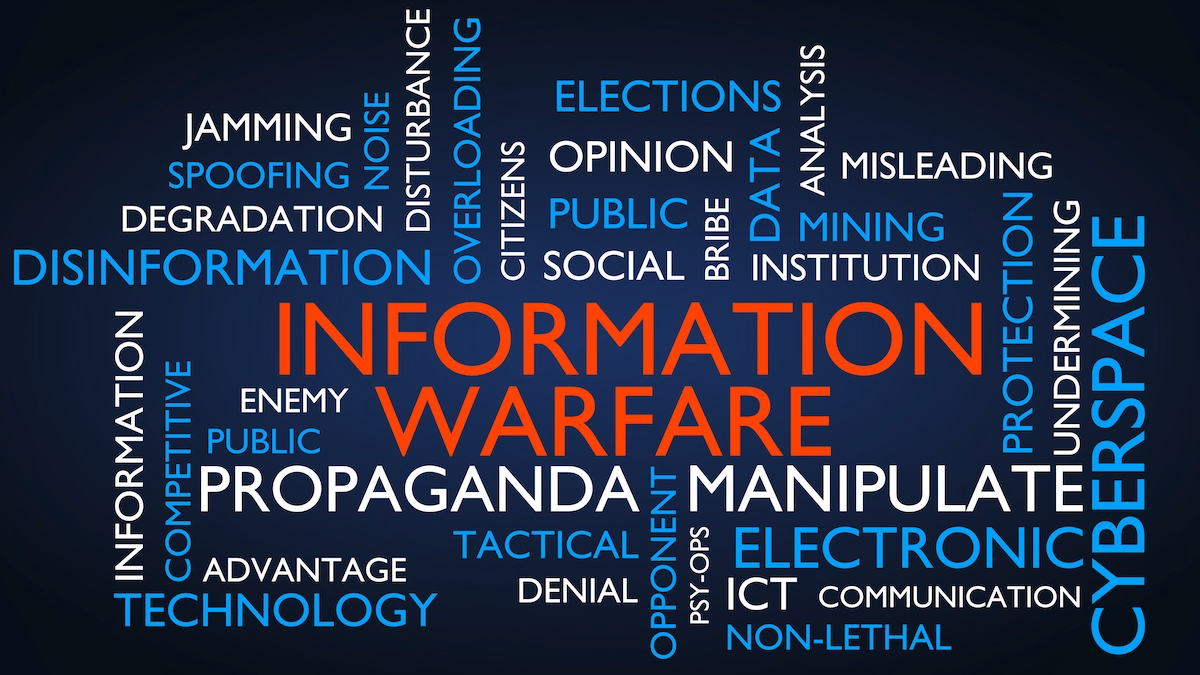
I.N.W.

Information & Narrative Warfare

A civilizational analysis of how truth, perception, platform logic, emotional amplification, AI-generated narratives, and strategic influence are reshaping governability, legitimacy, and social coherence in the 21st century.

Introduction

Information is no longer a supporting layer of politics or conflict. It has become a strategic battlespace in its own right.

Narratives now shape how populations interpret events, assign blame, define legitimacy, perceive threat, and imagine possible futures. The struggle is no longer only over facts, but over perception, trust, emotional direction, and the architecture of collective meaning.

The deeper issue is whether a civilization can preserve enough coherence in its interpretive environment to remain governable under permanent narrative competition.
Truth • Trust • Interpretation
I. From Information to Strategic Terrain
• States
• Intelligence services
• Media actors
• Platforms
• Ideological networks
• Corporations and non-state entities

Power now depends increasingly on the ability to shape the interpretive field through which reality is understood.

II. The Fragmentation of Shared Reality
Stable societies do not require universal agreement, but they do require a sufficiently coherent public sphere in which disagreement can still occur inside a common frame of reference.
• Personalized information flows
• Emotional reinforcement loops
• Segmented truth environments
• Identity-specific media ecosystems
• Algorithmically amplified interpretations
III. Narratives as Instruments of Power & IV. Speed, Emotion, and Amplification

The battle is not only over what is seen, but over what becomes thinkable

Modern information ecosystems reward speed over depth, reaction over reflection, emotional intensity over nuance, and virality over verification.

Framing Power
Narratives decide what events mean and what responses appear legitimate.
Emotional Velocity
Outrage and symbolic clarity move faster than measured truth.
Interpretive Hardening
Compressed events create rapid emotional fixation and lower patience for ambiguity.
Cognitive Haste
The deeper danger is the normalization of permanent cognitive acceleration.
V. Disinformation Is Only Part of the Problem
• Selective framing
• Narrative flooding
• Context removal
• Coordinated amplification
• Credibility erosion
• Attention exhaustion
• Strategic ambiguity
• Synthetic consensus effects

The aim is not always to make people believe the wrong thing. Sometimes the aim is simply to weaken their ability to believe anything with confidence.

VI. Platform Logic and Invisible Governance
Digital platforms function as invisible governance systems through ranking, recommendation, moderation, monetization, algorithmic prioritization, and interface design.
Power migrates from overt authority to invisible selection.
VII. AI and Synthetic Narrative Environments
• Text, image, voice, and video generation at scale
• Synthetic personas and adaptive narrative variants
• Persuasive messaging tailored to multiple audiences
• Simulation of authenticity and credibility cues

A civilization that cannot distinguish between organic discourse and synthetic influence risks losing interpretive sovereignty.

VIII. Trust as Civilizational Infrastructure
Trust is not merely cultural. It is infrastructural.
• Institutions lose authority
• Media lose mediation capacity
• Democratic consent weakens
• Social cohesion erodes
IX. Narrative Warfare and Geopolitical Pressure
• Symbolic framing
• Historical memory activation
• Identity mobilization
• Enemy construction
• Emotional polarization

A society may be strategically escalated long before it is physically attacked.

X. The Child and Narrative Ecology
Children increasingly grow up inside environments marked by permanent stimulation, fragmented attention, emotional acceleration, social comparison, and weak boundaries between reality and performance.
• Depth must be able to form
• Patience must be able to develop
• Conscience must be able to mature
• Trust must be able to emerge
XI. Toward Narrative Resilience

The goal is not to create a perfectly controlled information space.

• Critical literacy
• Historical awareness
• Institutional transparency
• Slower interpretive culture
• Ethical media design
• Cognitive patience
• Accountability for amplification systems
• Protection of truth-seeking institutions
The aim is to ensure that truth remains structurally possible.
XII. Final Strategic Conclusion
The information struggle of the 21st century is not merely about media.
It is about whether civilizations can preserve enough truth, trust, and interpretive coherence to remain governable.
If societies fail to defend the cognitive conditions required for dignity, legitimacy, and peaceful coexistence, informational systems will no longer merely describe civilization — they will begin to dissolve it from within.
Atlas Alignment

Layer positioning

CIV 03 — Primary Layer
The dossier belongs directly to the civilizational layer because it addresses the stability of meaning, legitimacy, trust, and shared reality.
OBS 07 — Strong Link
Interpretive environments, observation systems, detection, and signal shaping connect this file directly to the observational layer.
HUM 04 / STR 05 Relevance
Narrative warfare also reshapes human perception, emotional response, cognitive formation, and strategic escalation space.
Core Reading
Civilizations become vulnerable not only when attacked physically, but when reality can no longer stabilize perception, truth can no longer stabilize judgment, and trust can no longer stabilize institutions.