
US–Japan — Strategic Alliance
A durable security alliance at the centre of the Indo-Pacific is evolving into a broader framework for economic security, advanced technology and regional deterrence. Its strength is real; its interests are not always identical.
Strategic assessment · 18 October 2026
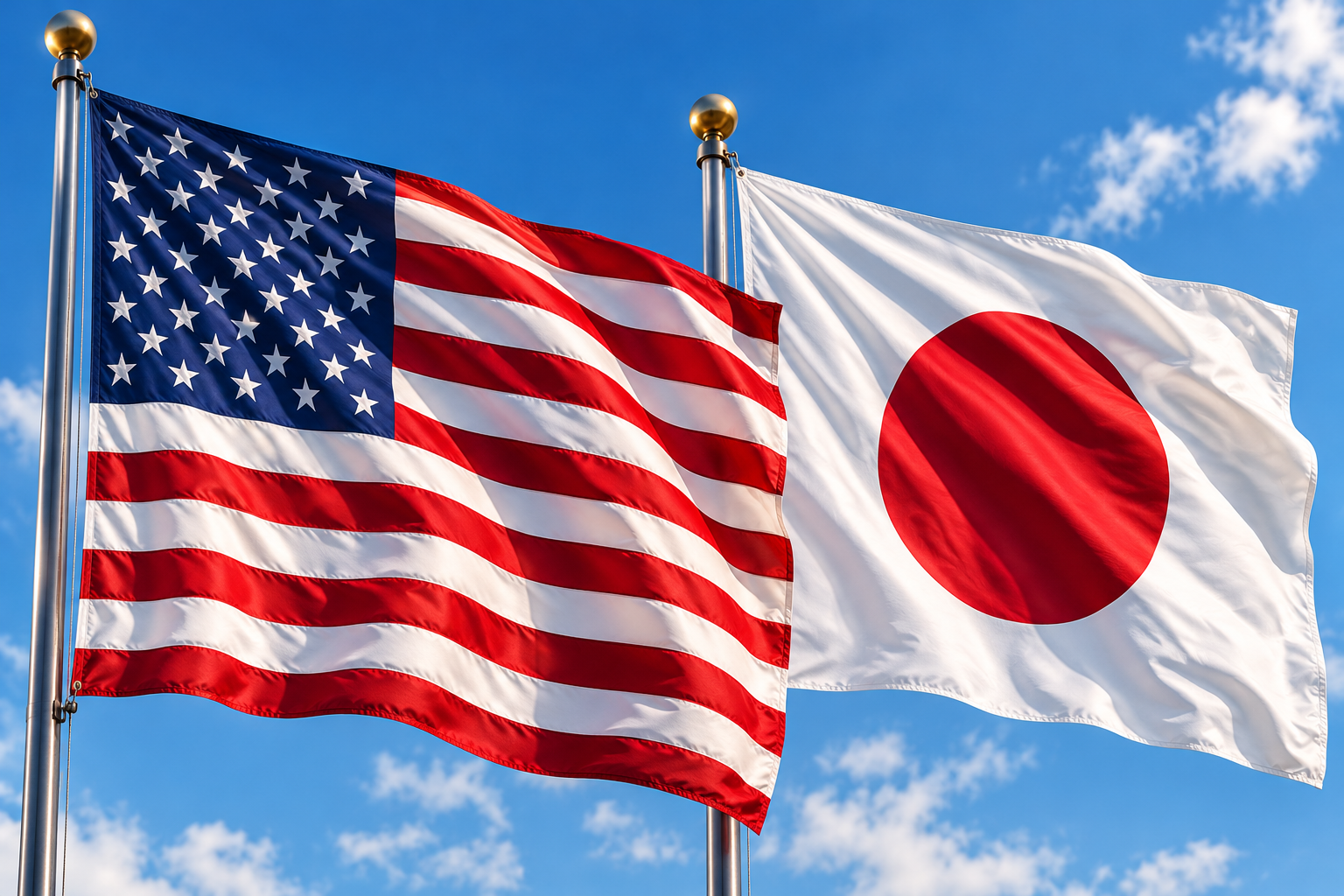
An alliance built on treaty commitments, not automatic policy alignment
The US–Japan Treaty of Mutual Cooperation and Security anchors the bilateral security relationship. Article V concerns an armed attack against either party in territories under Japanese administration; Article VI provides for the use of facilities and areas in Japan by US forces. The treaty creates important obligations but does not erase constitutional procedures, domestic politics or the need for coordination.
Japan is a sovereign strategic actor with its own political institutions, economic exposure, regional relationships and defence priorities. The alliance therefore combines deep interdependence with continuous negotiation over costs, capabilities and risk.
Cooperation is active across security, technology and regional diplomacy
On 19 March 2026, the White House reported new US–Japan initiatives covering deterrence, missile production, economic security, energy and investment. These announcements establish commitments and intended projects, not proof that every proposed investment or defence capability has already been delivered.
At their 22 September 2026 meeting, President Donald Trump and Prime Minister Sanae Takaichi reaffirmed cooperation on security and economic security, including AI, semiconductors and critical minerals. On 12 October, a bilateral Free and Open Indo-Pacific dialogue confirmed plans to advance practical cooperation and coordination with partners such as South Korea, Australia, India and the Philippines.
An investment announcement on 14 October concerning prospective semiconductor manufacturing in New York further illustrates the industrial dimension of the partnership. Planned production and investment should be distinguished from completed facilities and realised outcomes.
Six forces shaping the relationship
Regional security
The East China Sea, the Taiwan Strait and North Korean missile and nuclear capabilities make credible defence coordination a continuing priority.
Forward presence
US facilities and forces in Japan support regional reach, while creating questions about host-nation consent, local burdens and escalation exposure.
Economic security
Semiconductors, AI, cyber capabilities and critical minerals are increasingly treated as strategic infrastructure rather than purely commercial sectors.
Defence production
Missile co-production, supply-chain capacity and industrial readiness link deterrence to manufacturing capability.
Asymmetric bargaining
Tariffs, market access and large investment commitments demonstrate that close allies can still exert economic pressure on one another.
Regional partnerships
Japan connects bilateral US security cooperation to wider, issue-specific partnerships in the Indo-Pacific.
How cooperation becomes operational
Mutual security obligations
The bilateral treaty provides the legal and political foundation for defence cooperation, subject to its defined scope.
Interoperability
Bilateral planning, exercises, information-sharing and command coordination aim to improve responses to contingencies.
Strategic reassurance
US conventional and nuclear capabilities underpin deterrence assurances, alongside Japan’s expanding self-defence capacity.
Co-production and supply chains
Defence-industrial cooperation can strengthen production resilience, but delivery depends on funding, technology transfer and implementation.
Strategic investment
Technology, energy and manufacturing projects link the alliance to economic resilience and national industrial policy.
Partner networks
Japan–US–South Korea coordination, the Quad and other formats widen cooperation without creating a single uniform bloc.
Strong cooperation does not remove competing interests
The 2025 US–Japan trade and investment framework, including a 15% tariff structure on many Japanese imports and a widely cited US$550 billion investment commitment, shows that security partnership can coexist with hard commercial bargaining. The scale of announced investment is not equivalent to funds already disbursed or benefits already realised.
Japan faces a difficult balance between deterring coercion and avoiding an uncontrolled regional crisis. Taiwan Strait instability, North Korean weapons programmes and maritime confrontations carry different legal, military and economic implications. Cooperation on contingency planning should not be mistaken for a publicly established decision to intervene in any specific future scenario.
Domestic political accountability, Okinawa-related base burdens, fiscal constraints, energy security and supply-chain dependencies can shape how the alliance operates. Greater defence integration may increase capacity while also raising exposure to strategic decisions made by the other partner.
A strong alliance is a strategic system—not a blank cheque
The US–Japan relationship is among the most operationally consequential US alliances in Asia. Its durability rests on institutionalised security cooperation, shared concern over regional instability and increasingly integrated economic-security interests. Yet it should be assessed through observable capabilities and outcomes, rather than alliance rhetoric alone.
For Atlas Protocol, the key analytical distinction is between treaty obligation, political declaration, operational readiness and actual decision authority. Each can move at a different speed. The alliance may reinforce regional stability through credible deterrence, but misperception, competitive signalling and crisis escalation remain material risks.
Atlas assessment: The strength of an alliance is measured not only by its ability to deter conflict, but also by its capacity to preserve sovereign judgement, manage escalation and protect the people exposed to its decisions.
What Atlas should monitor next
Defence coordination
Evidence of practical command-and-control integration, joint readiness and completed capability upgrades.
Crisis communication
Changes in Taiwan Strait, East China Sea and Korean Peninsula tensions, including escalation-management mechanisms.
Investment delivery
Actual disbursements, construction milestones, tariff changes and realised technology or energy capacity.
Domestic consent
Political support, local base impacts and legislative or budgetary decisions in both countries.
Supply-chain resilience
Diversification, production capacity and vulnerabilities in semiconductors and critical inputs.
Partner alignment
Where wider Indo-Pacific cooperation strengthens coordination—and where participants retain distinct interests.
Primary documentation and dated evidence
Evidence cutoff: 18 October 2026. Official statements are attributed to their issuing governments. Atlas interpretation is independent; announcements are not presented as completed implementation.

Understanding complexity. Supporting decisions. Putting people first.