
EU–Canada: A New Transatlantic Strategic Alignment
A deepening partnership across trade, security, technology and industrial resilience — and a test of whether like-minded actors can diversify their dependencies without creating another exclusive geopolitical bloc.
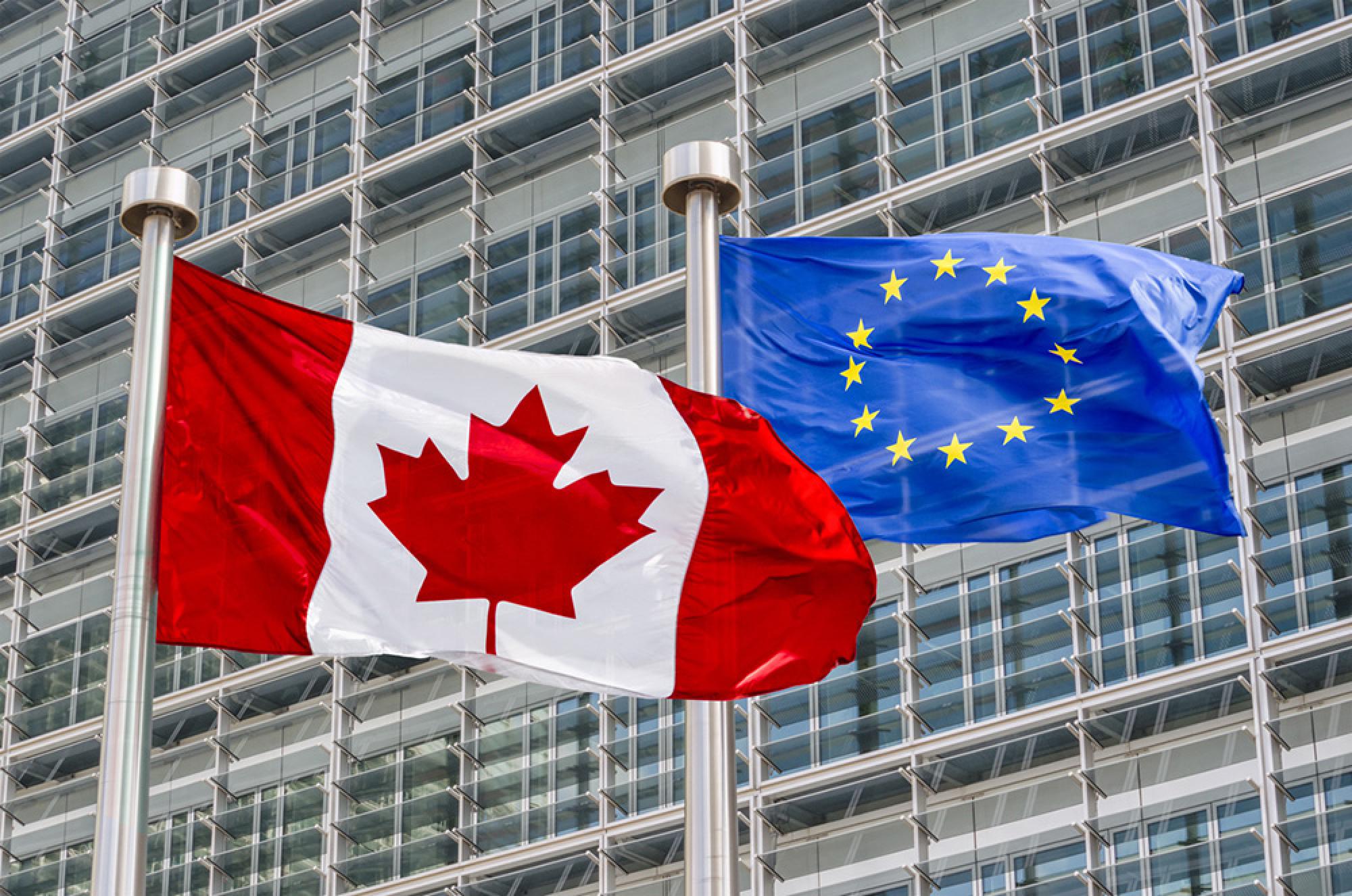
Alignment is not the same as integration
The EU and Canada are not forming a new sovereign entity. They are expanding an established partnership at a time when trade exposure, defence capacity, supply-chain concentration and technological dependencies have become strategic questions. The EU–Canada Comprehensive Economic and Trade Agreement (CETA) has applied provisionally since 2017. A Security and Defence Partnership was signed in June 2025, while cooperation on digital technology and critical minerals continues to deepen.
Atlas question: Can strategic diversification reinforce collective resilience while preserving political autonomy and open international cooperation?
Six dimensions of strategic convergence
Trade and market access
CETA provides an established platform. The question is how further cooperation changes market resilience and exposure to external shocks.
Defence cooperation
The 2025 Security and Defence Partnership creates a framework for industrial cooperation, crisis management and resilience, complementary to NATO.
Critical raw materials
Joint investment and supply-chain diversification could reduce concentrated dependencies, but implementation and processing capacity matter.
AI, cyber and digital trade
Existing digital cooperation covers AI, connectivity, semiconductors, quantum technologies, cybersecurity and data governance.
Resilience transition
Energy security, clean technology and climate adaptation create areas for collaboration, with trade-offs in costs and infrastructure.
Institutional compatibility
Deeper alignment must remain compatible with democratic accountability, distinct legal orders and existing multilateral obligations.
A proposed next stage — not an accomplished union
In September 2026, European Commission President Ursula von der Leyen proposed exploring a new association model with Canada. The Commission describes possible cooperation on critical minerals, digital trade, defence industrial integration, Ukraine and wildfire response. These are proposals and prospective areas of action, not evidence that Canada has joined the EU or that an association treaty is already in force.
Next diplomatic milestone: the EU–Canada summit scheduled for 29–30 October 2026 in Montreal. This assessment predates that meeting; outcomes must not be anticipated as facts.
Cooperation does not erase strategic friction
US economic gravity
Geography and existing supply chains limit how quickly Canada can diversify trade and investment.
Implementation gap
Political announcements require funding, regulation, infrastructure, procurement and sustained public support.
Democratic mandate
Any deeper association raises questions about representation, accountability and the boundary between cooperation and integration.
Strategic significance without bloc mythology
The EU–Canada relationship illustrates selective alignment: partners can strengthen security, technology and economic resilience while retaining distinct political institutions. Its multipolar significance lies not in creating a new pole overnight, but in increasing the capacity of actors to choose partners and withstand coercive dependencies.
This remains an analytical interpretation, not a formal EU or Canadian classification. The evidence supports deepening cooperation; it does not yet establish the long-term effectiveness or political durability of the proposed association model.
Greater strategic autonomy is meaningful only if it increases the ability to act responsibly — not merely the ability to compete.
From partnership to institutional performance
Atlas Protocol evaluates this alignment against three tests: whether it improves resilience in shared systems; whether it remains accountable to the people affected; and whether it strengthens rather than bypasses legitimate multilateral cooperation. The institutional architecture belongs to the Institutions analysis; the changing distribution of strategic options belongs here, under Multipolarity.
Evidence and verification
European Commission — EU–Canada relations and proposed future association ↗Council of the EU — 2025 Summit outcome and Security and Defence Partnership ↗European Commission — EU–Canada Digital Partnership ↗Prime Minister of Canada — SAFE negotiations statement ↗Assessment cutoff: 18 October 2026. Forward-looking statements are explicitly conditional. Atlas Protocol is an independent analytical initiative.

Understanding complexity. Supporting decisions. Putting people first.