
Global power is becoming more distributed, more fluid and more interconnected.
More than a shift from one dominant power to several.
Multipolarity is not simply a world with more powerful countries. It is a world in which strategic influence is distributed across different forms of power: military capacity, economic scale, technology, energy, finance, demography, institutional reach, geography and control over critical systems.
A multipolar world is not necessarily organised into permanent blocs. The same actor may cooperate with one partner on trade, another on security and a third on technology.
Not every problem belongs at the same level of governance.
Multipolarity does not require a single world architecture. Different problems demand different scales of responsibility and coordination. Atlas therefore begins with a prior question: at what level can this problem be addressed effectively while keeping decision-making as close as possible to the people and societies affected by it?
“Organize humanity only where humanity is the correct scale of the problem.”
Where national action is sufficient
Decision-making should remain national or subnational where problems can be addressed effectively at that level. Cooperation should not remove responsibility from the level closest to the societies affected without a clear functional reason.
Where interdependence requires a wider scale
Coordination expands when risks, systems or dependencies cross borders and cannot be managed adequately by individual states alone. The relevant region may be continental, subcontinental or issue-specific.
Only where the problem is genuinely global
Humanity-wide coordination is appropriate where the problem itself cannot be meaningfully contained at lower levels — for example where risks, commons or systemic consequences are intrinsically global.
From fixed blocs to strategic nodes
Atlas Protocol therefore studies the changing world order as a network of power centres, alliances, regional systems and strategically autonomous actors whose relationships may change depending on the issue.
States and regions with systemic weight
Major powers, regional powers and emerging centres of economic, technological, demographic or military influence.
Structures of coordination
Formal alliances and looser groupings still matter, but their internal cohesion and strategic purpose may differ by domain.
Agency beyond inherited categories
Many states increasingly seek strategic room to cooperate across competing centres of power rather than align permanently with one camp.
Alignment that changes by question
Trade, energy, security, climate, technology and finance can produce different coalitions at the same moment.
Strategic autonomy is becoming part of the system
Countries do not always need to choose permanently between larger powers. Europe, India, Gulf states, ASEAN members, African powers, Latin American states and other actors may pursue different combinations of cooperation, competition and autonomy across different strategic domains.
The central question is not only who is strongest. It is how power is connected, where dependencies are forming, which actors retain room for manoeuvre, and where changing alignments could either increase instability or create space for structured de-escalation.
Observe the shift before interpreting the outcome
Atlas Protocol does not begin with a preferred geopolitical map. It first observes how power and alignment are changing, then connects those shifts to institutions, strategic dependencies and decision-making.
Explore the changing relationships shaping multipolarity
These Atlas assessments examine bilateral partnerships, regional strategies and emerging groupings as distinct forms of alignment. Each case has its own opportunities, dependencies and constraints.
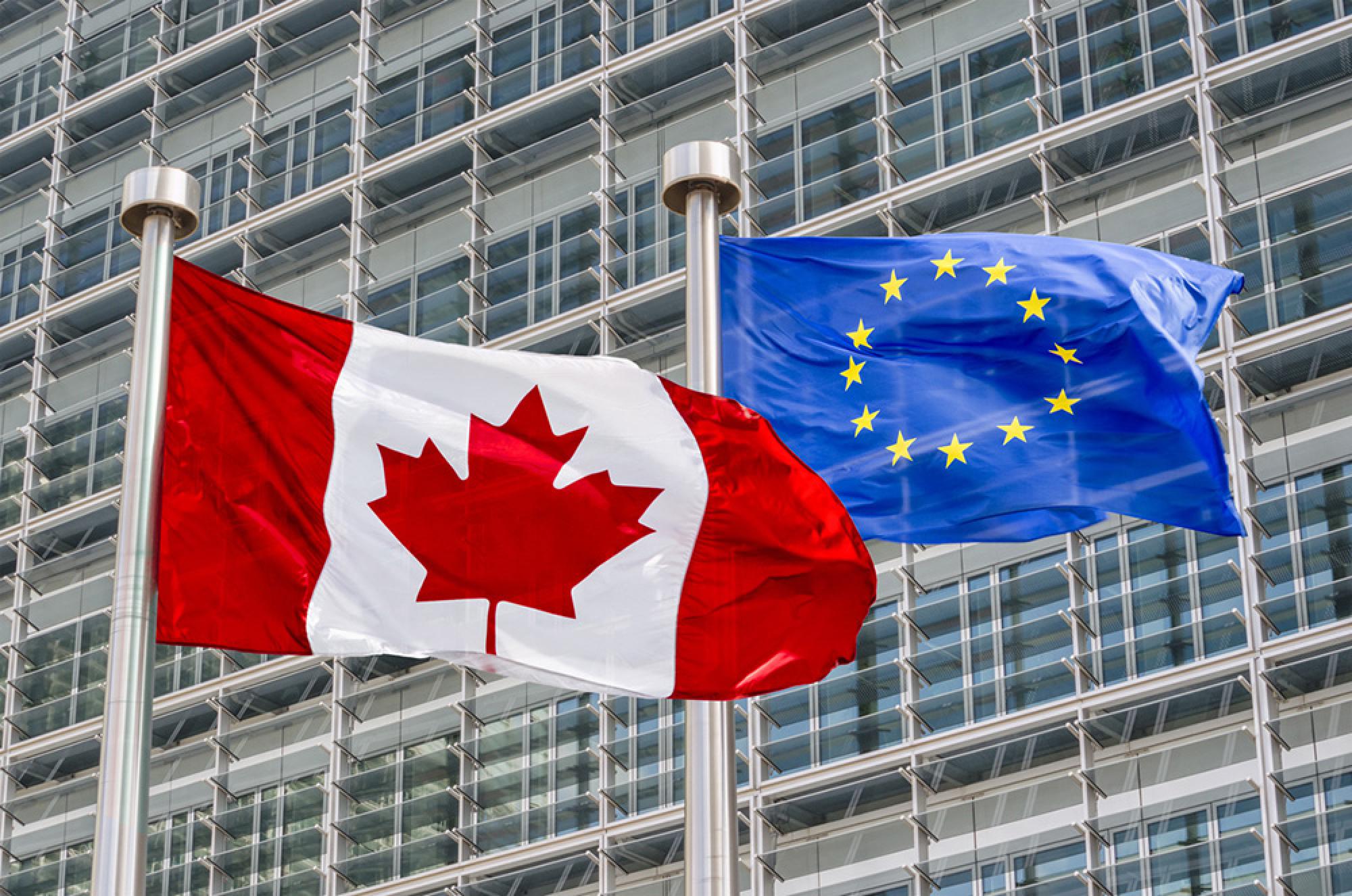
EU–Canada
Transatlantic cooperation in trade, security, critical resources and strategic resilience.
Explore Atlas assessment →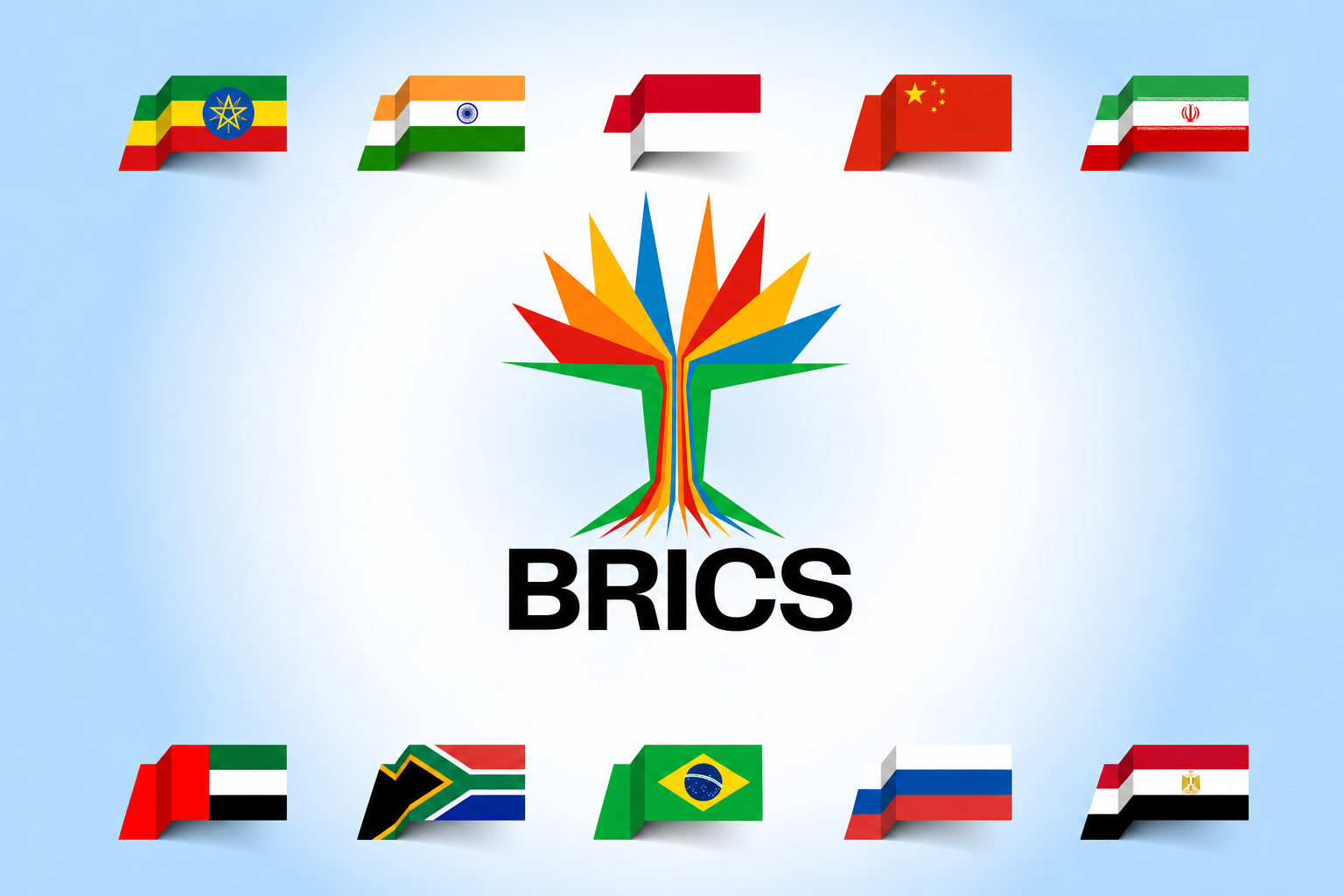
BRICS — Multipolarity in Formation
A heterogeneous coalition seeking greater influence in global economic and political governance.
Explore Atlas assessment →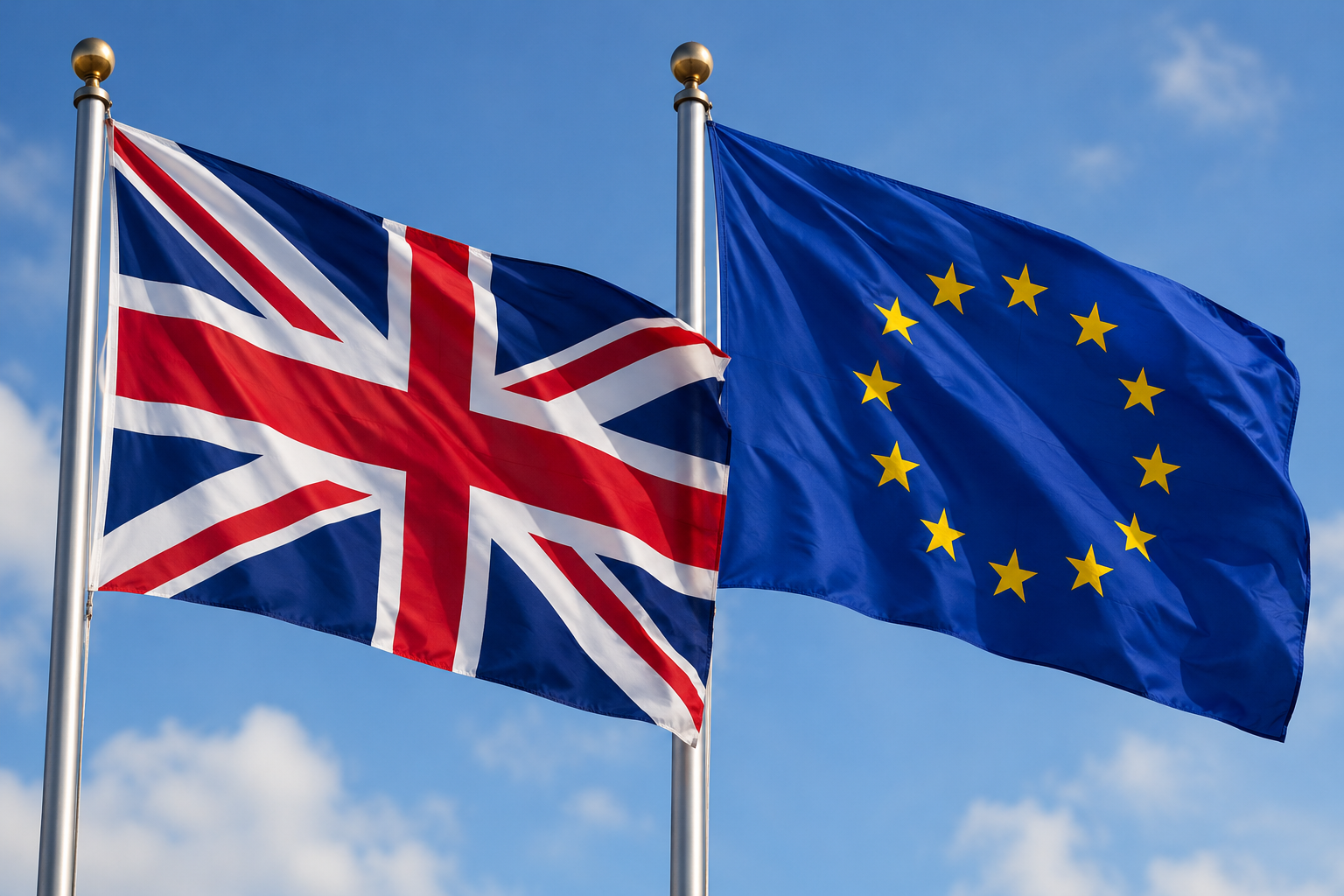
UK–EU
A changing relationship across defence, economic coordination and European strategic capacity.
Explore Atlas assessment →
India — Strategic Multi-Alignment
India’s engagement with competing power centres without committing to a single geopolitical bloc.
Explore Atlas assessment →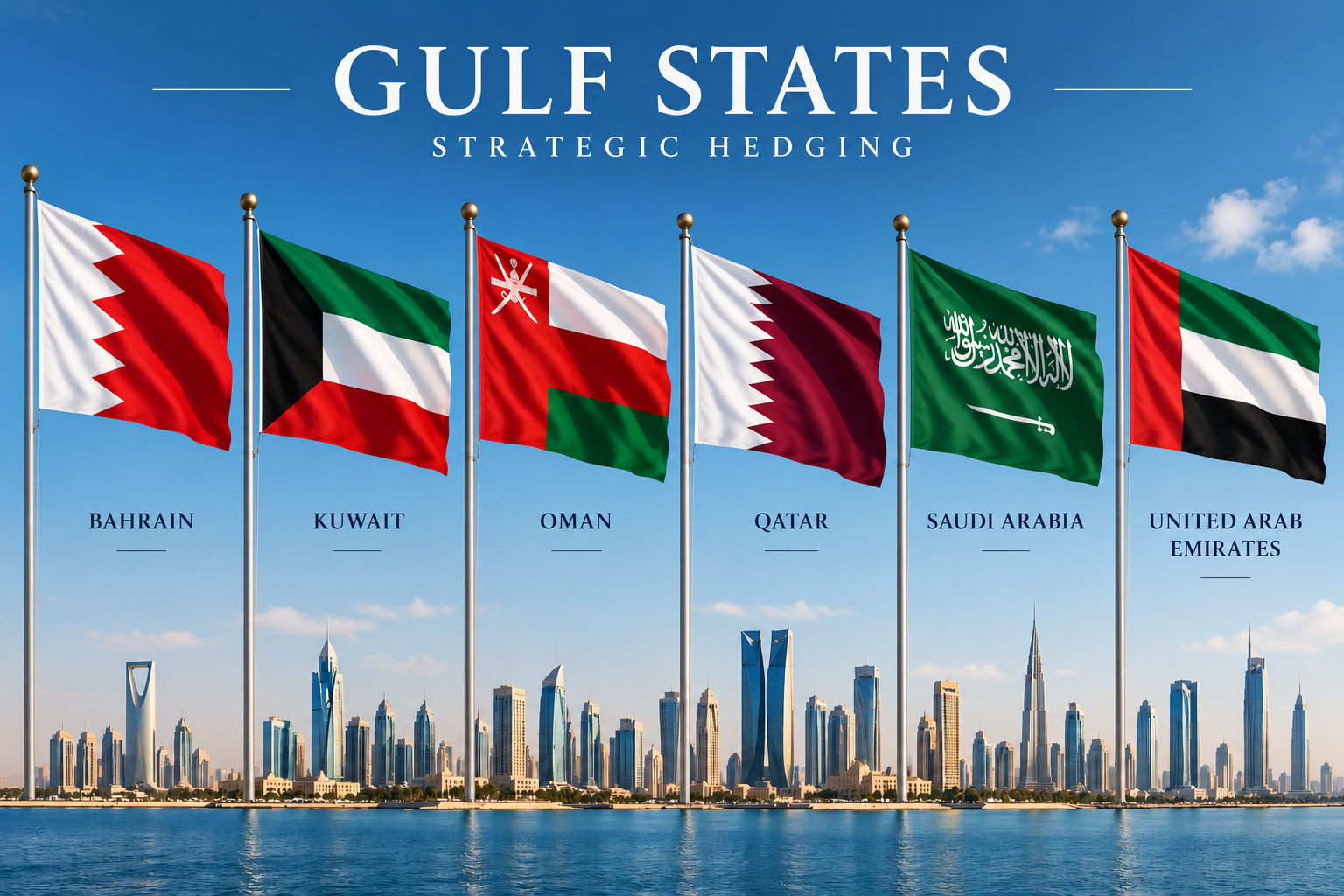
Gulf States — Strategic Hedging
Security, energy, investment and diplomacy across multiple international partnerships.
Explore Atlas assessment →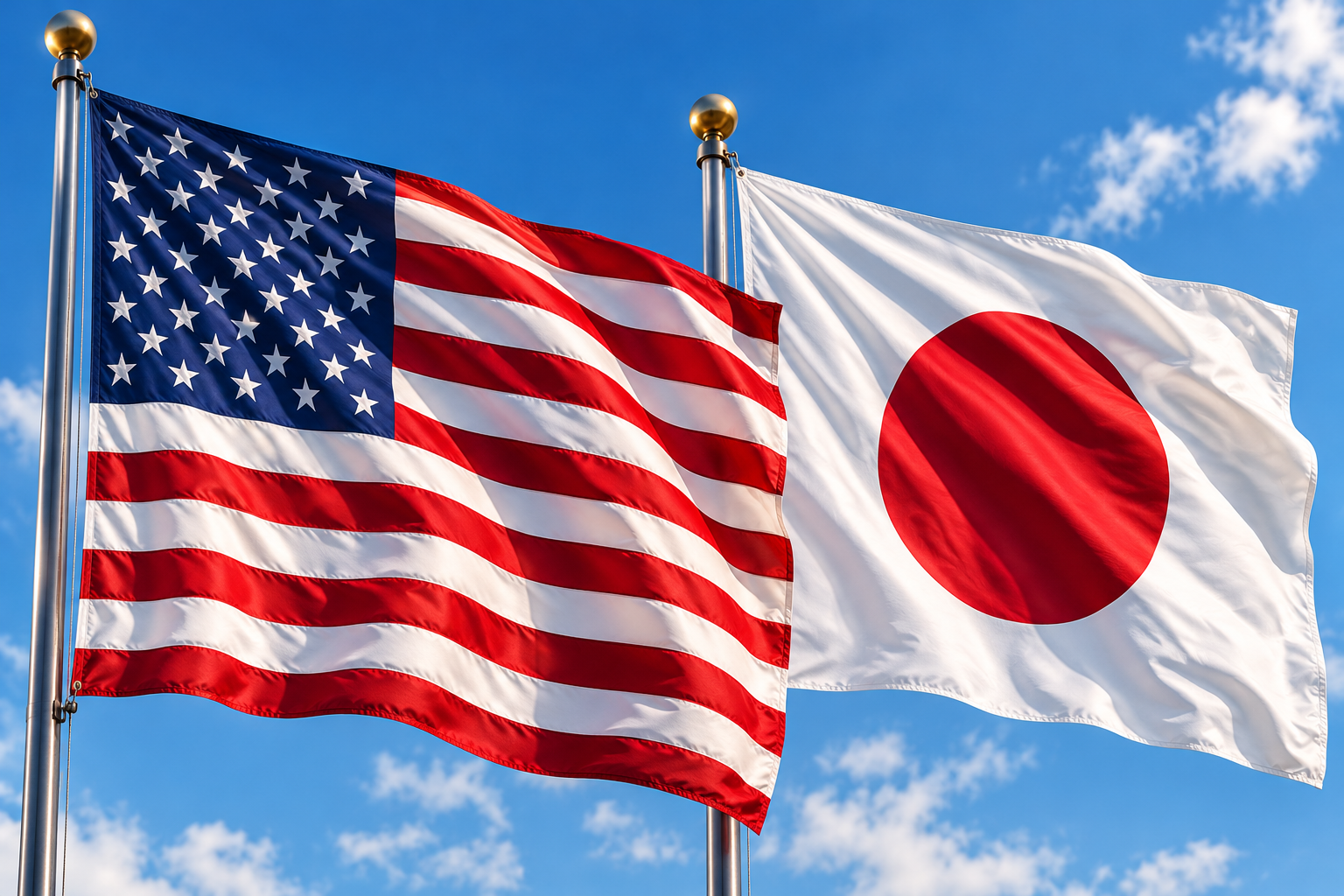
US–Japan — Strategic Alliance
Defence cooperation, economic security, technology and Indo-Pacific deterrence amid changing global alignments.
Explore Atlas assessment →Partnerships are changing without forming fixed camps.
Multipolarity is shaped not only by major powers, but also by the choices states and regional actors make about security, trade, technology, energy and strategic autonomy. Cooperation in one domain does not imply alignment in every other domain.
Atlas Protocol examines emerging and renewed partnerships as evolving relationships rather than predetermined blocs. EU–Canada cooperation, UK–EU realignment, India's multi-alignment and the strategic choices of Gulf states illustrate different ways actors navigate interdependence and competing centres of influence.
Each relationship must be assessed on its own evidence: shared interests, formal commitments, practical capacity, constraints and points of disagreement. Announced ambitions are not treated as completed integration.
Alignment is not the same as allegiance.
The analytical question is where cooperation creates genuine strategic capacity, where dependencies remain, and how changing partnerships affect the wider international system.
Explore the institutional dimensionMultipolarity and institutions cannot be separated
A changing distribution of power matters because international institutions were built around earlier political realities. The next question is therefore not only how power is changing, but whether institutions can adapt without losing legitimacy, capacity or the ability to coordinate — and whether each institution is operating at the right scale for the problem it is trying to solve.
From changing power to changing institutions.
Multipolarity asks how global power is being redistributed and at what scale cooperation is actually required. Institutions asks whether the international architecture can adapt to that redistribution without centralising decisions that can remain closer to the societies they affect.

Understanding complexity. Supporting decisions. Putting people first.