Planetary Systems (PLN 01)
Atlas Protocol · Intelligence Core · Layer 01 of 07

PLN 01 — Planetary Systems

Can the planet sustain us?

Planetary systems form the material foundation of human civilization. Climate, atmosphere, water, oceans, energy and natural resources determine the physical conditions within which societies, economies and geopolitical actors must operate.

Climate & AtmosphereWater & OceansResources & EnergyPlanetary Constraints
Explore intelligence dossiers ↓
Current Layer Reading

Physical limits. Systemic consequences.

Planetary pressures become visible through climate stress, changing water availability, resource concentration, oceanic conditions and the infrastructure needed to move energy, goods and people.

Atlas interpretation: planetary systems are not a passive background layer. They define the physical limits, dependencies and environmental conditions in which strategic pressure can emerge.

Layer Boundary

Physical System → Strategic Use

PLN 01 examines the physical system itself. Where geography, infrastructure, energy routes, ports or chokepoints are used as instruments of pressure, analysis continues in STR 05 — Strategic Domains.

Explore STR 05 →
Explore the seven analytical layers
PLN 01 · Intelligence Portfolio

Seven intelligence dossiers

Select a dossier to navigate directly to its existing analysis on this page.
PLN 01 • Top Secret Projection
Resource Scarcity
Chokepoint Risk
Global Stability

R.E.D.L.I.N.E.

Resource Emergency & Depletion Logistics & International Network Escalation

A planetary-systems analysis of how scarcity in energy, water, food, critical minerals and logistics can evolve into coercion, systemic dependency, and large-scale geopolitical escalation.

Executive Summary

The international system is entering a structural era in which strategic resources can no longer be assumed as secure public goods.

Energy, water, food and high-tech minerals are increasingly exposed to coercion, chokepoint leverage, and geopolitical manipulation. Under unmanaged scarcity, market pressure can mutate into militarization, internal collapse, and systemic fragmentation.

Unmanaged scarcity leads to militarisation. Managed scarcity leads to stability.
Scarcity • Coercion • Stability
I. Energy Breakdown Scenario
• Declining economic accessibility of oil and gas
• OPEC+ supply shocks and price manipulation
• Gulf energy security linked to nuclear bargaining
• Europe exposed through LNG chokepoints and maritime escorts

Energy scarcity does not remain economic for long. It rapidly spills into naval risk, sabotage vulnerability, and dependency coercion.

II. Critical Minerals & High-Tech Hegemony
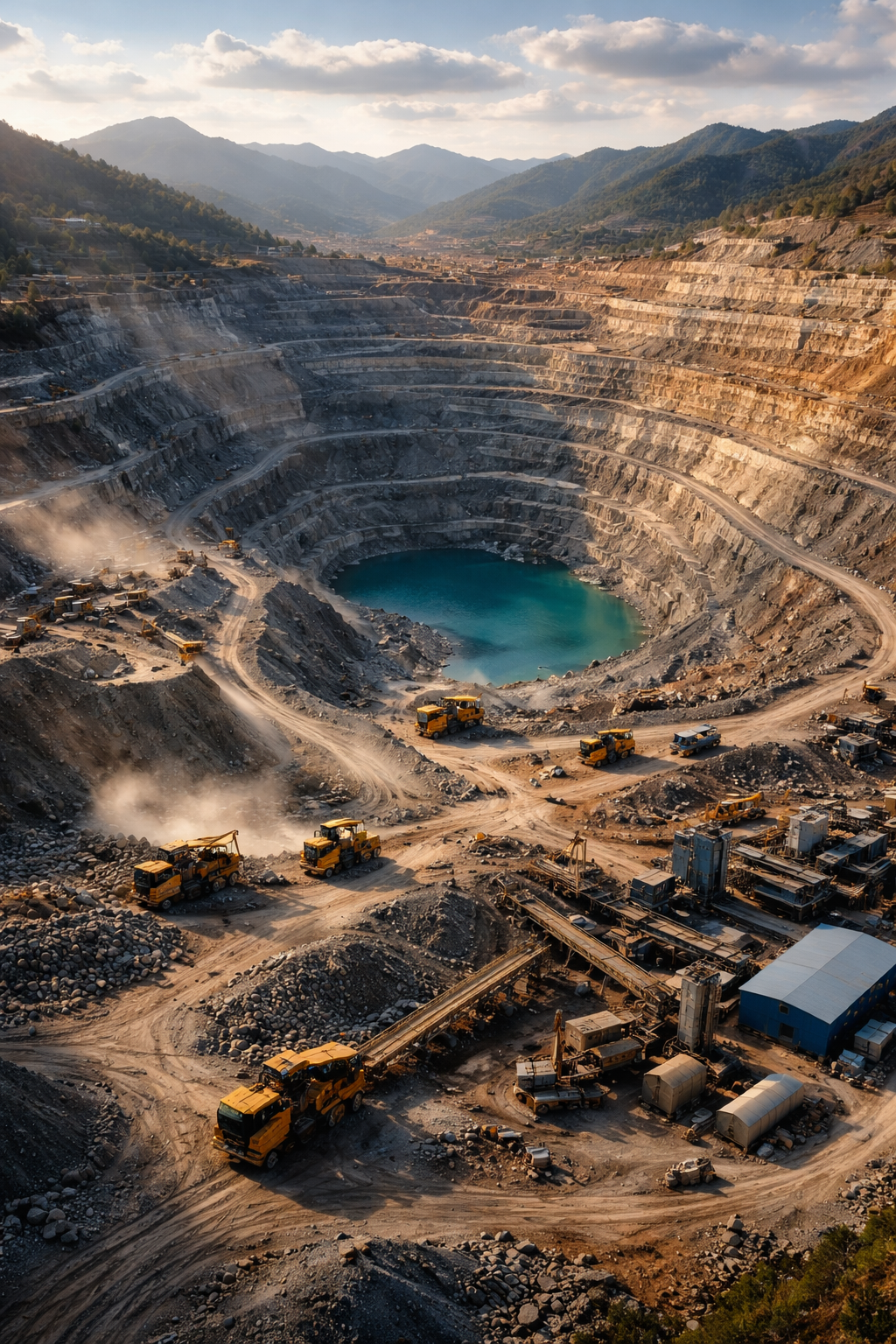
• Copper concentration in Chile and Peru
• Lithium Triangle as battery supply choke structure
• Cobalt fragility through Congo governance risk
• Chinese rare-earth processing dominance
Worst case: technological blackmail, industrial sabotage, and cyber-economic warfare.
III. Phosphorus, Water & Ocean Sovereignty

Scarcity is not one crisis. It is a networked escalation architecture.

Food systems, freshwater basins, and maritime domains are increasingly exposed to weaponization, leverage politics, and cascading breakdown.

Phosphorus
Modern agriculture depends on phosphate fertilizers, with Morocco holding structural dominance.
Water Stress
Indus, Nile, and Tigris/Euphrates show how reservoirs and river systems can become military domains.
Ocean Sovereignty
Overfishing, EEZ contestation, Arctic lanes and fisheries pressure can move navies toward confrontation.
Systemic Effect
Food insecurity, urban collapse, displacement and embargo dynamics can converge into wider conflict arcs.
IV. Structural Vulnerability of Europe
• Minimal fossil reserves
• No major phosphate reserve
• No rare-earth processing dominance
• Water stress exposure and defence-industrial import dependence

Strategic risk: Europe can drift into a condition of coercive dependency under pricing pressure, political conditionality, and fragile supply networks.

V. Global Escalation Triggers
• Chinese rare-earth export ban
• Moroccan phosphate embargo
• OPEC+ oil shock above $200 per barrel
• Nile crisis, monsoon collapse, fishery militarization, cobalt failure
Any one of these can generate system-wide instability.
VI. Failure Cascade – 2050
• Copper bottlenecks stall electrification
• Lithium constraints slow battery adoption
• Phosphorus shortages disrupt food systems
• Water scarcity drives population flows
• Energy shocks collapse output and tech embargoes fracture military equilibrium

End-state risk: a neo-mercantilist world order in which coercion progressively replaces trade.

VII. Strategic Roadmap
• Accelerate renewables, nuclear, hydrogen, geothermal and substitution materials
• Build reserves and circular design capacity
• Establish multilateral resource-security pacts and arbitration mechanisms
• Protect chokepoints, rivers, oceans and Arctic zones from militarization
• Advance transparency, desalination, phosphorus recovery, and domestic resilience
The decisive variable is whether leadership chooses cooperation over extraction-nationalism.
VIII. Final Strategic Conclusion
Conflict is not inevitable. Scarcity can be governed.
Security arises from redundancy, transparency, innovation and restraint.
In Atlas terms, resource collapse is not a single-domain problem. It is a planetary systems destabilizer that links scarcity, chokepoints, governance fragility and strategic coercion into one escalation matrix.
Atlas Alignment

Layer positioning

PLN 01 — Primary Layer
This file belongs directly to the planetary systems layer because it concerns the physical, extractive and ecological resource base on which industrial civilization depends.
STR 05 / GEO 06 Link
Chokepoints, embargoes, supply chains, naval confrontation, and coercive dependency connect this file directly to strategic and geopolitical escalation dynamics.
OBS 07 Relevance
Verified resource datasets, early-warning monitoring, and transparent scarcity indicators are essential to prevent panic, manipulation and delayed response.
Core Reading
When critical resources cease to function as shared economic goods and become instruments of coercion, the international system shifts from interdependence toward controlled scarcity and escalation risk.
PLN 01 • Strategic Foresight
Water Access
Governance Capacity
Structural Stability

A.Q.U.A. 2055

Access, Quality, Uncertainty & Authority

A strategic assessment of water as a silent but decisive structural variable shaping stability, migration, food security, governance capacity, and long-term geopolitical leverage.

Executive Summary

The central risk is not the absence of water, but the unequal ability to access, manage, and govern it.

Water scarcity is unlikely to appear as one singular global crisis or trigger widespread interstate war. Instead, it will operate as a silent structural variable that differentiates which systems remain stable, governable, and autonomous — and which ones fragment under cumulative stress.

Water is moving from environmental policy into national security, economic planning, and geopolitical strategy.
Access • Governance • Stability
I. Water as a Security Variable
• Water infrastructure treated as critical national asset
• Disruption viewed as stability threat, not merely humanitarian issue
• Hydrological risk indicators increasingly integrated into intelligence assessments

Water is unlikely to be weaponized directly at scale, but its disruption will amplify existing vulnerabilities, especially in fragile states.

II. Conflict Dynamics: Pressure, Not War
• Water scarcity intensifies internal unrest
• It acts as conflict multiplier in already fragile regions
• Migration flows increasingly emerge from water-stressed rural areas
Water is rarely the cause of conflict, but frequently the accelerant.
III. Technology, Agriculture & Social Fracture

Technology can mitigate water scarcity, but it cannot equalize access.

Desalination, AI optimization, and advanced water systems improve resilience for some states and cities, but structural inequalities remain and agricultural pressure continues to dominate.

Desalination
Large-scale desalination will expand for coastal states and megacities, especially with renewable energy support.
Structural Limits
Energy dependence, brine disposal, ecological costs, and rural exclusion remain unresolved at scale.
Agriculture
With about 70% of freshwater consumption tied to agriculture, food security becomes inseparable from water governance.
Social Fracture
Urban prioritization can accelerate rural depopulation, informal settlements, and domestic legitimacy crises around allocation decisions.
IV. Managed Capital, Not Full Marketization
• Water increasingly metered and priced
• Regional trading through rights and quotas may expand
• Full commodification remains politically untenable
• Strategic control likely remains public or semi-public

Water is becoming managed capital — but not a fully free-market commodity.

V. Institutional Lag & Regional Outlook
• Existing multilateral frameworks remain slow and weakly enforceable
• Bilateral and regional water agreements likely grow in importance
• Upstream states gain leverage as arbitration mechanisms weaken
• MENA, Sub-Saharan Africa, South Asia and Southern Europe remain structurally exposed
No effective global institution currently exists to govern water stress under climate volatility.
VI. Final Strategic Conclusion
Water will not redefine the international order through open conflict.
It will quietly redefine who remains governable, stable, and autonomous.
Any future framework for global governance, security architecture, or institutional reform that fails to integrate water as a structural variable will remain incomplete.
Atlas Alignment

Layer positioning

PLN 01 — Primary Layer
This file belongs directly to the planetary systems layer because freshwater access, hydrological stress, and water allocation are foundational physical variables shaping long-term system viability.
OBS 07 — Strong Link
Hydrological indicators, stress mapping, early-warning signals, and infrastructure monitoring all connect this dossier directly to the observational layer.
GEO 06 / STR 05 Relevance
River leverage, water security doctrines, migration pressure, agricultural dependency, and institutional fragmentation link water directly to geopolitical and strategic planning.
Core Reading
Water is not best understood as a crisis narrative, but as a foundational variable of governability, resilience, and uneven structural power in the mid-21st century.
PLN 01 • Strategic Analytical File
Atmospheric Stability
Climate Dynamics
Strategic Observation

A.T.M.O.S.

Atmospheric Threat Monitoring & Observation System

A planetary-systems assessment of the atmosphere as the most universal and least governed infrastructure on Earth — a shared physical constraint that increasingly shapes stability, forecasting capacity, and geopolitical stress.

Premise

The atmosphere is the most universal and least governed infrastructure on Earth.

Unlike territory, oceans, or resources, the atmosphere cannot be divided, owned, or controlled through traditional sovereignty. Yet it governs climate stability, water cycles, agricultural productivity, biodiversity, and human habitability for every civilization at once.

The atmosphere is a shared planetary vulnerability.
Atmosphere • Constraint • Stability
I. The Physical Reality
• Troposphere
• Stratosphere
• Mesosphere
• Thermosphere

Across these layers operate jet streams, monsoon systems, ocean-atmosphere coupling, carbon cycles, and heat distribution. Even small disturbances can trigger cascading effects across continents.

II. Atmospheric Power
• Climate modelling systems
• Satellite observation networks
• Weather prediction infrastructure
• Atmospheric data repositories
Atmospheric knowledge is becoming a strategic capability comparable to navigation, communication, or energy infrastructure.
III. Strategic Implications & IV. Conflict Accelerators

Atmospheric change does not cause conflict directly. It intensifies the systems that can.

The atmosphere increasingly functions as a force multiplier of geopolitical stress through its effects on food security, water systems, migration, energy infrastructure, and supply chains.

Food Security
Shifts in rainfall and seasonal stability alter agricultural productivity and crop reliability.
Water Systems
Atmospheric circulation shapes river flows, drought cycles, glacier melt, and regional water stress.
Migration & Economy
Extreme weather, desertification, and climate disruption destabilize livelihoods, mobility, and supply chains.
Stress Amplifier
Drought, heat waves, crop failures, glacier retreat and sea-level rise primarily amplify underlying instability.
V. The Governance Gap
• Existing institutions focus on emissions reduction
• Environmental regulation remains fragmented and contested
• Scientific research alone does not treat the atmosphere as a security variable
• Institutional capacity lags behind physical climatic change

The gap between physical reality and governance capacity continues to widen.

VI. Relevance to Atlas Protocol
Atlas Protocol does not depend on climate consensus or ideological alignment. It recognizes only one fundamental principle: physical reality ultimately constrains all political systems.
Recognizing atmospheric dynamics as a strategic variable allows states and societies to anticipate stress points before they escalate into conflict.
VII. Core Insight
The atmosphere is simultaneously universal, indispensable, and ungovernable through traditional sovereignty.
Its stability depends not on control, but on shared awareness and coordinated adaptation.
The atmosphere does not belong to any nation, yet it governs all nations equally. Understanding that reality is a prerequisite for any long-term framework of planetary stability.
Atlas Alignment

Layer positioning

PLN 01 — Primary Layer
This file belongs directly to the planetary systems layer because atmospheric stability is a core physical condition shaping life, climate, agriculture, water systems, and habitability.
OBS 07 — Strong Link
Satellite networks, modelling systems, forecasting infrastructure, and atmospheric data repositories connect this dossier directly to the observational layer.
STR 05 / GEO 06 Relevance
Disaster preparedness, infrastructure resilience, migration, food systems, and geopolitical stress amplification place atmospheric stability in direct dialogue with strategic and geopolitical planning.
Core Reading
The atmosphere is the only infrastructure on Earth that cannot be divided or governed conventionally, yet it quietly determines the stability boundaries within which every political system must operate.
PLN 01 • Strategic Analytical File
Energy Systems
Infrastructure Resilience
Geopolitical Yield

E.N.E.R.G.Y.

Energy Networks, Extraction, Resilience & Geopolitical Yield

A planetary-systems analysis of energy as the operational force of civilization — the variable that determines industrial scale, military readiness, technological speed, and geopolitical leverage.

Premise

Energy is the primary engine of human civilization.

Every economic system, technological capability, and military capacity ultimately depends on access to reliable energy sources. While resources, water, and climate shape survival conditions, energy determines the speed, scale, and power of civilization itself.

Energy is the operational force of civilization.
Power • Networks • Civilization
I. Historical Energy Transitions
• Biomass Era
• Coal Era
• Oil Era
• Nuclear Era
• Renewable Transition

Each energy transition reshaped global power structures. The current shift toward solar, wind, advanced nuclear, storage, and hydrogen is simultaneously technological, economic, and geopolitical.

II. Energy as Geopolitical Power
• Resource control
• Infrastructure networks
• Technological leadership
• Market influence
Energy therefore acts as a geostrategic multiplier of national capability.
III. Strategic Infrastructures & IV. Transition Risks

Modern civilization depends on vast interconnected energy systems whose disruption can rapidly affect entire economies.

The ongoing transition offers long-term promise, but periods between energy regimes have historically carried instability, competition, and asymmetric access risks.

Electrical Grids
Backbone systems for communication, healthcare, digital infrastructure, and basic societal continuity.
Pipelines & Transport
Oil, gas, LNG carriers, shipping lanes, and rail networks remain core distribution arteries.
Nuclear & Minerals
High-density generation, uranium, rare earths, lithium, cobalt, and storage materials carry strategic implications.
Transition Risk
Supply chain disruption, mineral dependency, grid instability, and uneven access can intensify tension during transformation.
V. Energy–Climate Interaction
• Reliable energy supply
• Environmental sustainability
• Economic viability

Industrial energy use has contributed significantly to greenhouse gas emissions and atmospheric warming, while energy innovation remains essential to mitigating climate risk. Energy policy therefore intersects directly with A.T.M.O.S. and climate dynamics.

VI. Energy within the Atlas Framework
Within Atlas architecture, energy represents the element of FIRE. It enables technological civilization, but can also accelerate geopolitical competition when scarcity, dependency, or system fragility increase.
Energy abundance stabilizes societies. Energy scarcity destabilizes them.
VII. Core Insight
Energy is the circulatory system of industrial civilization.
Without stable energy systems, modern civilization cannot function.
Civilizations are not defined solely by their cultures or institutions. They are defined by how they produce, distribute, and use energy. Understanding energy systems is therefore essential to understanding the stability and trajectory of human civilization.
Atlas Alignment

Layer positioning

PLN 01 — Primary Layer
This file belongs directly to the planetary systems layer because energy is a foundational operating condition of industrial civilization, shaping extraction, infrastructure, and physical system viability.
STR 05 / GEO 06 — Strong Link
Pipelines, grids, nuclear capacity, mineral dependencies, market control, and energy corridors connect this dossier directly to strategic leverage and geopolitical balance-of-power dynamics.
A.T.M.O.S. / OBS 07 Relevance
Energy policy intersects directly with atmospheric dynamics, emissions trajectories, and system monitoring, making observational intelligence and climate-energy linkage essential.
Core Reading
Energy is not merely a commodity market. It is the enabling architecture that determines whether complex civilization can sustain production, mobility, defense, and digital continuity under stress.
PLN 01 • Polar Stability Architecture
Arctic Pressure
Antarctic Integrity
Dual-Time Logic

P.U.L.S.E.

Polar Unified Layer for Stability & Equilibrium

A planetary-systems analysis of the polar regions as core regulators of global stability, where the Arctic operates as an active pressure system and Antarctica as a latent integrity system within a single strategic architecture.

Executive Directive

The Earth’s polar regions are not peripheral environments. They are core planetary regulators within the Atlas Protocol system.

Together, the Arctic and Antarctica define the future boundary conditions of global stability. The Arctic tests how humanity manages competition. Antarctica tests whether humanity can sustain restraint.

This is not a geographical issue. This is a civilizational stress test.
Pressure • Integrity • Equilibrium
I. Arctic — Active Pressure System
• Ocean-based system with dynamic ice instability
• Rapid accessibility increase due to climate change
• Hydrocarbon reserves and emerging shipping routes
• Military positioning, surveillance, and early warning systems

Current state: controlled competition. Trajectory: unstructured escalation risk through extraction disputes, proximity incidents, and legal ambiguity.

II. Antarctica — Latent Integrity System
• Continental mass under extreme ice coverage
• Antarctic Treaty System (ATS)
• No militarization, no resource exploitation, scientific collaboration
• Rising research stations and future extractive capability signals
Present: stabilized through agreement. Future: conditionally unstable under treaty erosion, scarcity pressure, and technological breakthroughs.
III. System Dynamics — Dual-Time Model

What is normalized in the Arctic becomes permissible in Antarctica.

The poles operate as a linked temporal system: the Arctic as immediate stress field, Antarctica as deferred decision field. This creates a behavioral feedback loop across time.

Immediate Stress
The Arctic tests live management of competition under accelerating access and fragmentation risk.
Deferred Decision
Antarctica remains protected today, but future permissibility depends on present precedent.
Behavioral Feedback
Normalization of resource competition in one pole shifts the governance threshold of the other.
Atlas Core Logic
The poles are linked governance tests, not isolated territories.
IV. Failure Scenario
• Arctic: fragmented control zones
• Arctic: militarized resource competition
• Antarctica: treaty weakening and entry into resource competition
• Planetary impact: climate destabilization feedback loops

End-state: simultaneous ecological and geopolitical breakdown.

V. Stabilization Principle
Arctic requires structured competition. Antarctica requires enforced restraint. Stability emerges when competition is structured and restraint is preserved.
The goal is not to freeze reality, but to govern pressure without losing integrity.
VI. Atlas Positioning & Final Statement
The poles are not territories. They are planetary control systems.
They define whether humanity evolves toward fragmentation or coordinated planetary stewardship.
The poles are not remote. They are central to the system. They do not belong to nations. They belong to the outcome of human coordination.
Atlas Alignment

Layer positioning

PLN 01 — Primary Layer
This file belongs directly to Planetary Systems because the poles function as climate regulation zones and long-term control systems for planetary stability.
GEO 06 / STR 05 — Strong Link
Resource competition, transport routes, treaty architecture, military proximity, and governance logic place both poles in direct dialogue with geopolitical and strategic escalation dynamics.
OBS 07 Relevance
Continuous signal tracking of military activity, resource claims, treaty deviations, and threshold-crossing behavior makes observational discipline essential to stabilization.
Core Reading
If the Arctic becomes a battlefield, Antarctica will not remain a sanctuary.
PLN 01 • Systemic Pressure Analysis
Climate Pressure
Cross-Layer Impact
Stabilization Logic

Global Climate Dynamics

Systemic Pressure Analysis

A planetary-systems assessment of climate change as a continuous cross-layer pressure field that amplifies existing vulnerabilities across ecological, social, strategic, and geopolitical systems.

Context

Climate change is not a singular environmental issue. It is a system-wide dynamic affecting the foundational stability of planetary systems and the structures built upon them.

Rising temperatures, shifting weather patterns, melting ice caps, and oceanic changes are not isolated phenomena. They interact across systems, influencing water availability, food production, energy systems, and habitability zones.

Within Atlas Protocol, climate change is positioned as a cross-layer pressure factor, not a standalone domain.
Pressure • Interaction • Amplification
Systemic Impact Across Layers
• PLN 01 — temperature rise, ocean acidification, sea level increase, cryosphere destabilization
• SPE 02 — biodiversity loss, migration and extinction patterns, ecological disruption
• CIV 03 — agricultural instability, urban vulnerability, infrastructure strain
• HUM 04 — displacement, public health stress, behavioral adaptation
• STR 05 / GEO 06 / OBS 07 — resource competition, border pressure, modelling, narrative shaping
Destabilization Patterns
• Water scarcity → regional tensions and resource competition
• Food insecurity → social unrest and governance stress
• Climate migration → demographic pressure on receiving regions
• Melting polar regions → geopolitical repositioning and competition
• Extreme weather events → economic shocks and infrastructure collapse
These patterns do not remain isolated. They interact and compound into multi-factor destabilization loops.
Escalation Risk

Climate change introduces a form of indirect escalation risk.

Unlike traditional conflict triggers, its effects are gradual yet cumulative, diffuse across regions, and difficult to attribute to a single actor. This creates delayed response mechanisms, fragmented policy alignment, and increased probability of misinterpretation between actors.

Gradual but Cumulative
The pressure builds slowly, making early corrective action less politically intuitive.
Diffuse Effects
Multiple regions are affected differently, which fragments urgency and alignment.
Attribution Gap
No single actor can be clearly blamed, reducing decisive strategic response.
Silent Amplifier
Climate dynamics increase the likelihood that existing tensions escalate beyond control.
Stabilization Logic (Atlas Protocol Perspective)
• System Awareness Before Intervention
• Integration into DEFEND structures
• GSIL application as time-buffering mechanism
• Cross-layer coordination between monitoring, economics, and geopolitics

Climate-related pressures must be integrated into stabilization thinking, not treated in isolation.

Strategic Outlook
Climate change will continue to shape global stability trajectories over the coming decades through its influence on geopolitical positioning, resource access, and population distributions.
The absence of structural integration increases the risk of fragmented responses, reactive policy cycles, and systemic misalignment across layers.
Conclusion
Climate change is not a singular crisis. It is a systemic condition.
Its true impact emerges through interaction — between layers, between systems, and between actors.
Ignoring this dimension does not eliminate its effects. It only delays their recognition within decision-making processes.
Atlas Alignment

Layer positioning

PLN 01 — Primary Layer
This file belongs directly to the planetary systems layer because climate dynamics are rooted in atmospheric imbalance, oceanic change, cryosphere destabilization, and long-term physical system transformation.
Cross-Layer Force
Its defining feature is not sectoral isolation, but propagation across all Atlas layers, from ecological disruption to migration, infrastructure strain, and geopolitical competition.
OBS 07 / STR 05 / GEO 06 Relevance
Predictive modelling, strategic interpretation, resource competition, and border pressure make climate dynamics inseparable from observational, strategic, and geopolitical planning.
Core Reading
Climate dynamics rarely act as direct causes of conflict. They function instead as a continuous pressure field that amplifies instability wherever systems are already vulnerable.
PS-01 • Eyes Only
Lunar Infrastructure
Resource Extension
Strategic Threshold

SPACE EXTENSION

Orbital Threshold

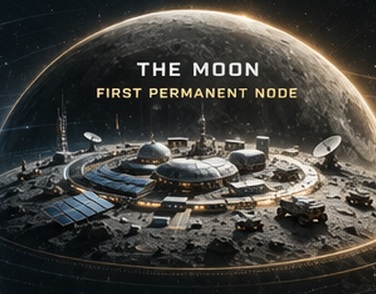
A planetary-systems assessment of humanity’s transition from a planet-bound civilization to a space-extended system, beginning with the Moon as the first external node of the human operating domain.

Executive Signal

Humanity is approaching a structural transition from a planet-bound civilization to a space-extended system.

This shift is not symbolic. It is infrastructural, economic, and strategic. The first permanent footholds beyond Earth — starting with the Moon — will redefine resource access, energy systems, geopolitical balance, and long-term survival of the species.

This is not exploration. This is expansion of the operating domain of humanity.
Expansion • Infrastructure • Threshold
I. Trigger Point: Lunar Permanence
• NASA — Artemis Program
• CNSA — ILRS Program
• ESA — strategic partner layer
• Objective: permanent human presence on the Moon within 5–7 years

Once achieved, humanity becomes multi-location — not yet multi-planetary, but no longer Earth-exclusive.

II. Resource Layer: Strategic Drivers
• Helium-3 — fusion potential
• Titanium, aluminium, rare earth elements
• Water in permanently shadowed craters
• Hydrogen fuel and oxygen life-support conversion
The Moon is not valuable as territory. It is valuable as resource infrastructure.
III. Infrastructure Layer & IV. Geopolitical Layer

Control is not defined by presence. Control is defined by infrastructure.

The first stable lunar infrastructure will not simply mark symbolic leadership. It will define standards, access, dependency chains, and gravitational influence beyond Earth.

Energy Systems
Solar arrays, storage systems, and reliable off-world power become foundational control mechanisms.
Habitats & Relay
Closed-loop life support and Earth-Moon communication networks determine durable residency.
Transport Corridors
Orbital and surface logistics will shape access, throughput, and system dependency.
Silent Competition
This is not framed as conflict, but it is competitive positioning between open-alliance and centralized execution models.
V. Economic Layer & Risk Layer
• In-situ resource utilization (ISRU)
• Orbital manufacturing
• Space-based energy systems
• Interplanetary logistics
• Resource disputes, dual-use ambiguity, unequal access, and weak arbitration

Existing governance frameworks prohibit national ownership, but remain insufficient for industrial-scale activity and enforcement.

VI. System Insight & Human Layer
Space Extension is not an escape from Earth and not a backup plan. It is an extension of Earth’s system into a larger operational field. Earth remains the core; space becomes amplification, redundancy, and expansion layer.
The first permanent presence beyond Earth triggers an identity shift: from planetary thinking toward species-level thinking.
VII. Strategic Conclusion
Space Extension is inevitable.
The only variables are who leads, how it is governed, and whether it stabilizes or fragments.
The Moon is not the destination. It is the first external node of the human system.
Atlas Alignment

Layer positioning

PLN 01 — Primary Layer
This file belongs directly to Planetary Systems because it marks the transition from a closed planetary loop to an open-system architecture extending Earth’s operational domain beyond its surface.
STR 05 / GEO 06 — Strong Link
Lunar infrastructure, alliance models, resource access, standards, and dependency chains place this dossier directly in dialogue with strategic competition and geopolitical leverage.
OBS 07 / HUM 04 Relevance
Observation systems, relay networks, orbital monitoring, and the psychological threshold of off-world permanence connect this file to both observational and human-interface dynamics.
Core Reading
Humanity does not expand because it wants to. It expands because its systems outgrow their boundaries.