
SPE 02 — Species Level
SPE 02 examines humanity at the level of the species: the shared vulnerabilities, coordination burdens and survival conditions that transcend individual states. It tracks species-wide resilience through atmospheric knowledge, food stability, health robustness, migration pressure and collective risk recognition.
Explore intelligence dossiers ↓Shared vulnerability. Collective coordination.
Species-level stress becomes visible when food systems, biological resilience, migration signals and common knowledge infrastructures begin to move out of balance at the same time. These pressures are not isolated incidents. They are coordination challenges affecting humanity at scale.
Atlas interpretation: SPE 02 tracks the conditions that determine whether the human species can absorb stress, coordinate responses and preserve its collective continuity under pressure.
Species Survival → Civilizational Adaptation
SPE 02 examines the species as a whole. Where the analysis shifts toward institutional design, social organization, long-term adaptation and historical continuity, it continues in CIV 03 — Civilizational Layer.
Explore CIV 03 →Five intelligence dossiers
Select a dossier to navigate directly to its existing analysis on this page.



N.C.A.R.
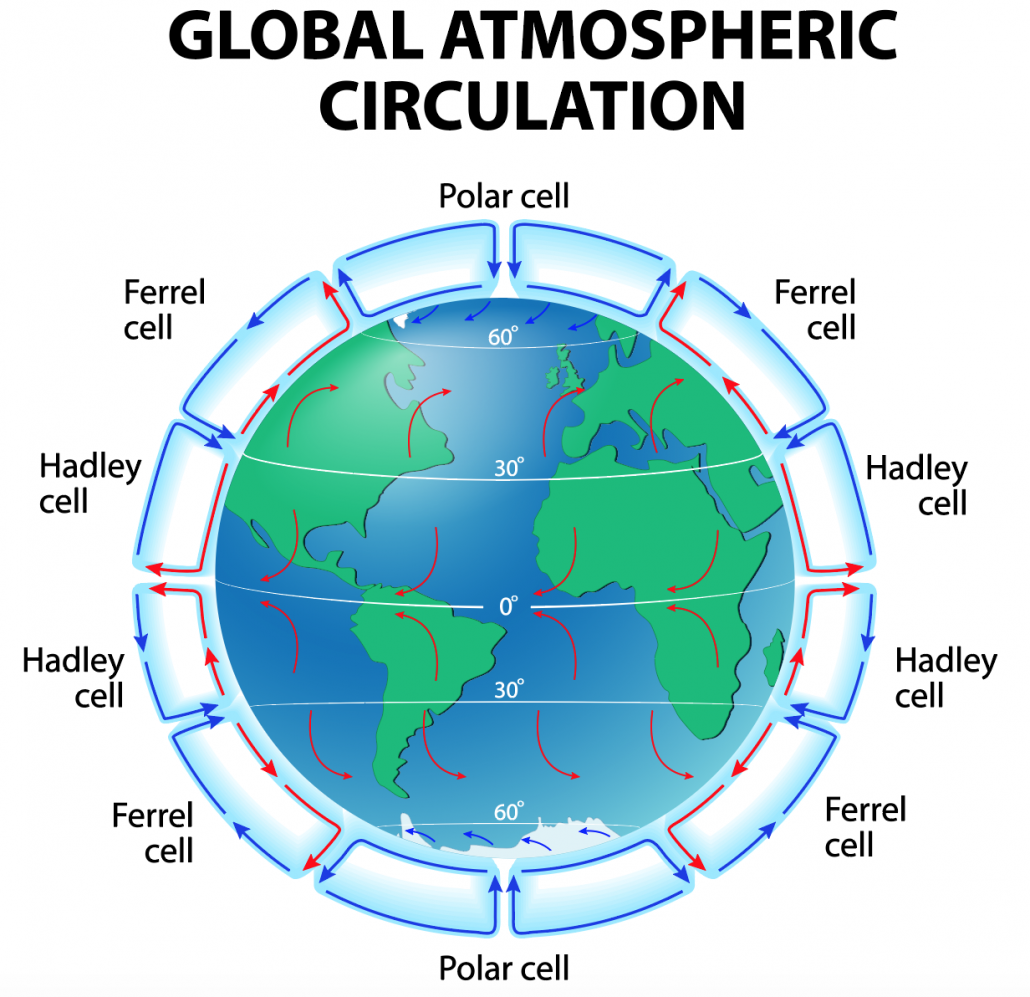
A species-level analysis of how shared atmospheric science, predictive certainty, and climate modeling can evolve from collective foresight infrastructure into a strategic lever of geopolitical power.
Climate science is not only about observation. It is also about who owns the authority to define timing, urgency, and collective obligation.
N.C.A.R. is approached here as more than a research institution. It represents a shared atmospheric knowledge layer that transforms physical change into predictive certainty. Once physical reality becomes modelled, comparable, and policy-relevant, it also becomes politically consequential.
The strategic issue is knowledge control: who defines the models, the timelines, the comparative baselines, and therefore the urgency of response.
To weaken shared science is not to deny reality, but to recover room for strategic ambiguity
In the climate era, influence increasingly flows through models, projections, uncertainty management, and the timing of interpretation.
This duality reveals a clear pattern: actors may accept the reality of change while rejecting the multilateral scientific authority that converts that reality into normative pressure.
Together these dimensions form a new climate–security nexus in which physical change, geography, and strategic competition converge.
Without shared scientific baselines, long-term instability becomes harder to coordinate around and easier to exploit tactically.
Layer positioning
Food Systems Stability
A species-level reflection on food not as a sector alone, but as a structural stability anchor whose disruption can accelerate economic stress, social unrest, migration pressure, and geopolitical instability.
A species cannot remain stable if access to food becomes uncertain, unequal, or structurally disrupted.
Food instability has historically been one of the fastest triggers of unrest, forced migration, and civilizational breakdown. In the modern era, food systems are under converging pressure from climate variability, geopolitical disruption, fragile supply chains, and widening economic inequality.
These pressures are no longer isolated. They interact, reinforce one another, and create systemic vulnerability at a global scale.
Food instability is not merely an outcome. It is an early signal of systemic imbalance.
Within Atlas thinking, food belongs to the architecture of species-level stability rather than being treated as a narrow sectoral issue.
These directions are not optional optimizations. They are structural requirements for long-term societal resilience.
Layer positioning
RISK LAYER
A species-level reflection on humanity as an already interconnected system, facing non-national, non-adversarial, and increasingly non-attributable risks that exceed traditional governance architectures.
Humanity already functions as one integrated system, but still governs itself through structures designed for segmented responsibility.
Biological exposure, technological acceleration, economic interdependence, and information flows have made global societies irreversibly interconnected. Yet political, legal, and security frameworks remain overwhelmingly state-centric, reactive, and poorly equipped for risks that are transboundary, systemic, and non-attributable.
Humanity has moved from passive exposure to possessing tools that can either protect continuity or deepen shared vulnerability.
The next evolutionary step may be structural rather than technological
Long-term protection requires enduring organizational capacities oriented toward anticipation, not only reaction.
Cooperation has been demonstrated as effective, but it remains mostly emergency-based rather than institutionalized as a permanent civilizational capacity.
Existential technologies require existential coordination.
Certain challenges cannot be solved at the individual level and require collective intelligence as a foundational civilizational capability.
Layer positioning
Health Resilience
A species-level reflection on health not as a national service domain alone, but as a global systemic variable that directly shapes economic stability, social cohesion, and geopolitical resilience.
A species cannot sustain stability if its biological integrity is weakened.
Health instability is one of the most underestimated drivers of systemic disruption. Though often treated as a sectoral or national issue, it is in reality a global stability variable whose deterioration rapidly affects multiple layers of human civilization.
Recent global events have demonstrated how quickly local health instability can evolve into economic disruption, social fragmentation, and broader geopolitical stress.
Health instability is not an isolated event. It is a system signal indicating deeper structural fragility.
In Atlas thinking, health belongs to the species layer because biological resilience underpins stability across society, economy, and governance.
These directions are not sectoral optimizations. They are structural safeguards against broad systemic collapse scenarios.
Layer positioning
Migration
Atlas Protocol approaches migration neither as inherently beneficial nor inherently destabilising, but as a structural variable whose meaning depends on causality, scale, velocity, capability and system capacity.
Migration is neither inherently a threat nor inherently a solution.
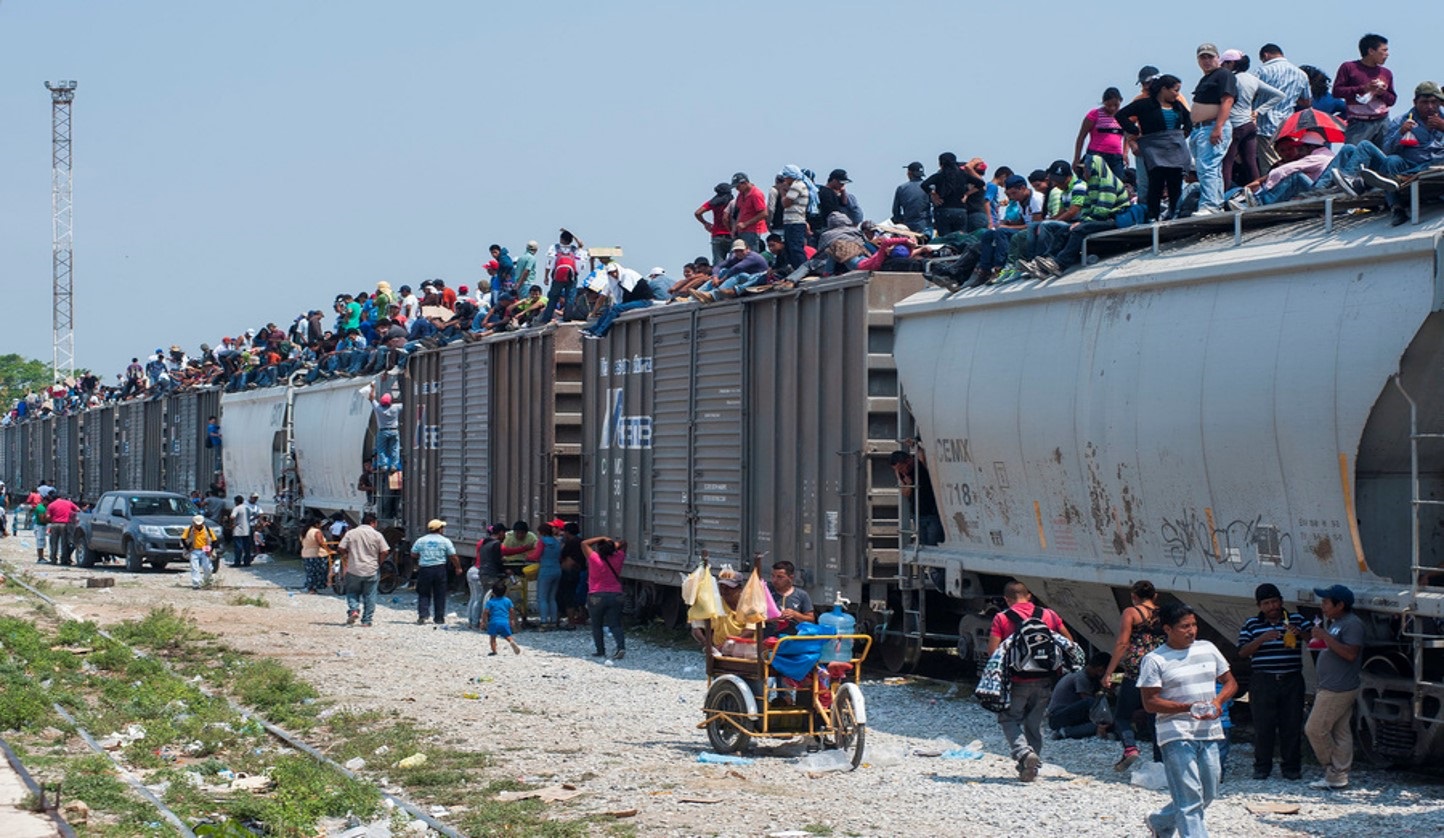
Human movement can be a response to pressure, a mechanism of adaptation, a transmission channel between systems and a test of destination capacity. Its strategic meaning depends on what drives movement, who can move, how quickly flows develop and whether receiving systems can adapt.
Pressure → Capability → Mobility → Route → Reception → Absorption → Adaptation → Feedback
Migration is treated as a dynamic system rather than a single border event. Each stage can alter the conditions influencing the next movement cycle.
These conditions may influence migration, but none should automatically be treated as causal. Atlas requires corroboration across independent indicators.
Severe pressure does not always produce more migration.
Migration requires resources. As systems deteriorate, some populations may become less capable of moving because money, transport, documents, information or networks disappear.
Migration routes can become humanitarian, security and geopolitical environments. Transit states may absorb pressure without being intended destinations, while border and maritime corridors can acquire strategic importance.
The relevant variable is not migration volume alone, but migration exposure relative to the receiving system's adaptive capacity.
Migration may amplify existing constraints when exposure exceeds adaptive capacity.
Atlas separates association from causation. Housing pressure, fiscal stress or political polarisation cannot automatically be attributed to migration when domestic structural factors may also be decisive.
Two axes. Four conceptual environments.
Before numerical scoring or country ranking, Atlas requires indicator definition, data-quality assessment, normalisation testing, weighting sensitivity, historical back-testing, robustness analysis and calculation integrity verification.
Origin Stability + Corridor Governance + Destination Capacity
Sustainable migration governance cannot operate at only one point in the chain. Upstream resilience, midstream corridor governance and downstream capacity must be analysed together.
A framework that cannot fail is not an analytical model.
The Atlas framework must weaken or fail if proposed pressure indicators do not relate meaningfully to mobility, if capacity indicators do not explain destination outcomes, or if alternative models consistently perform better.
Cross-layer positioning

Understanding complexity. Supporting decisions. Putting people first.