
How does a regional union navigate a more contested and multipolar world?
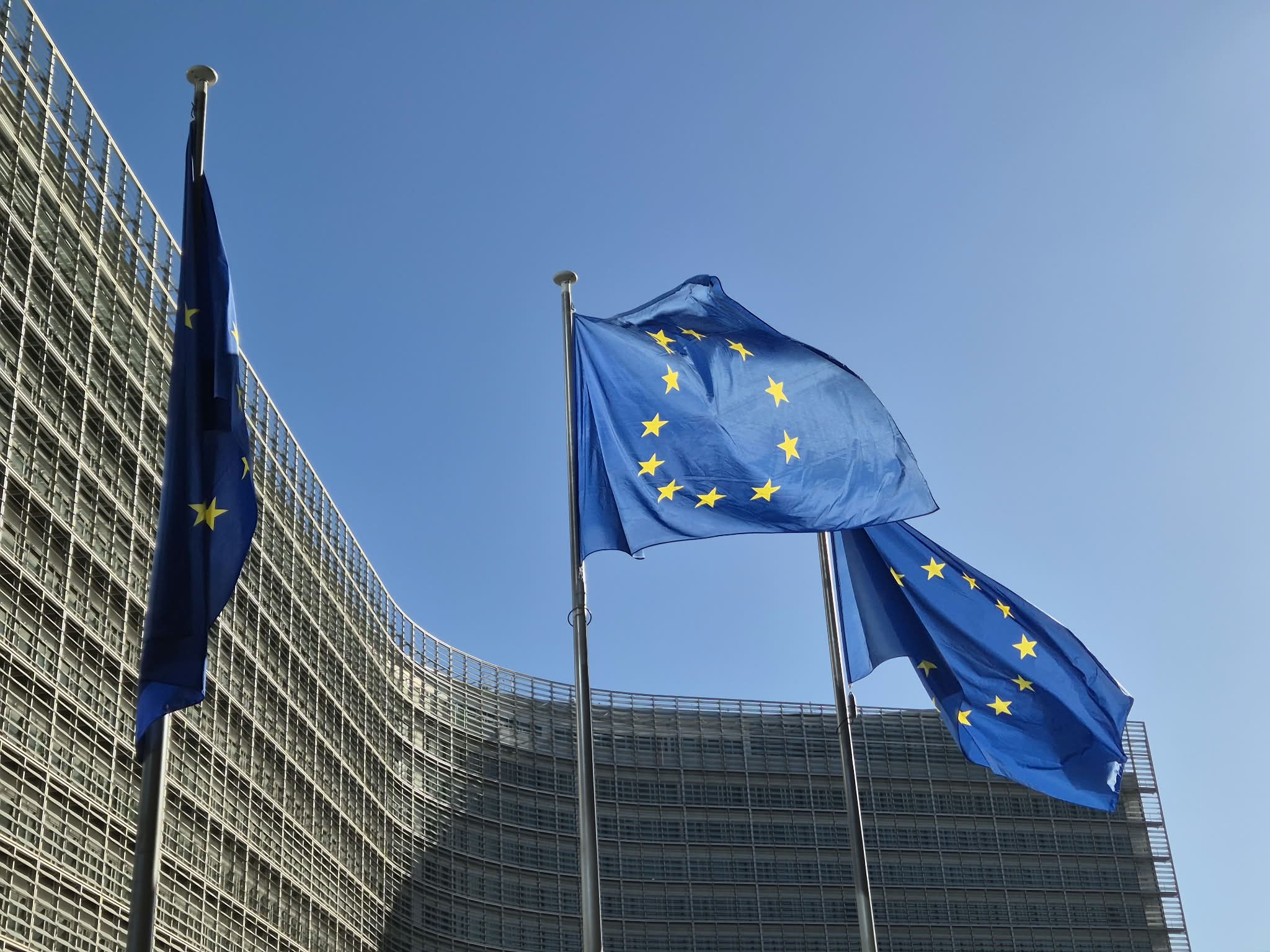
European Union · Multilateral strategy in a changing global order
From defending multilateralism to adapting it.
The European Union continues to place the United Nations Charter, international law and rules-based cooperation at the centre of its external positioning. But its current language goes further than institutional preservation. The EU increasingly acknowledges that the multilateral system must evolve as geopolitical competition, economic interdependence, technological change and global risks reshape the environment in which institutions operate.
For Atlas, the key signal is the transition from preserving multilateralism as an inherited order toward treating institutional adaptation as a strategic requirement.
Three layers of the EU’s evolving multilateral strategy
Protect the Foundations
The EU continues to anchor its approach in the UN Charter, international law, sovereign equality, territorial integrity, human rights and the peaceful settlement of disputes. Reform is framed as renewal of the multilateral system rather than abandonment of its foundational principles.
Reform the Institutions
The EU supports reforms intended to make multilateral institutions more effective, representative, inclusive and responsive. This includes support for UN reform and the UN80 process, alongside reform of global economic and financial governance.
Build Wider Coalitions
The EU is increasingly working through flexible partnerships that cross traditional geopolitical alignments. The Partners for Multilateralism initiative links European actors with countries from Africa, Asia, the Americas and the Pacific around shared institutional challenges.
A deliberately cross-regional coalition
On 21 September 2026, the European Union launched the Partners for Multilateralism initiative together with Australia, Barbados, Brazil, Canada, India and Kenya. The composition matters. Rather than organising cooperation around a single geographic or traditional geopolitical bloc, P4M brings together countries from different continents, development contexts and political traditions.
Cooperation across geopolitical divides
P4M links institutional reform with practical cooperation on peace and security, sustainable development, trade, resilient supply chains, international finance, digital transformation, artificial intelligence, climate change and global health.
This breadth is strategically significant. Multilateral governance is no longer treated only as diplomacy between states. Economic resilience, technology, finance and security increasingly sit inside the same institutional conversation.
Multipolarity is entering institutional language.
Atlas does not treat P4M as evidence of a settled new global architecture. It is, however, a relevant signal that actors across regions are increasingly acknowledging multipolarity while simultaneously searching for mechanisms that preserve cooperation across geopolitical divisions.
Multilateralism is becoming geo-economic.
The P4M declaration connects institutional cooperation directly to economic interdependence. Trade, supply chains, investment, development finance and international financial architecture are treated alongside security, climate and emerging technologies.
Six questions behind Europe’s multilateral transition
How far will the EU adapt to a genuinely multipolar system?
Recognising multipolarity is different from designing institutions around it. Atlas follows whether political language eventually produces structural change in representation, participation and decision-making.
What does “more representative” mean institutionally?
Calls for representative multilateral institutions raise deeper questions about regional balance, demographic change, economic weight and the distribution of institutional power.
Can cooperation move beyond traditional geopolitical blocs?
P4M provides an early test of whether states with different alignments and interests can build practical coalitions without requiring comprehensive political alignment.
Can collective action reinforce rather than dilute sovereignty?
The emerging EU argument is that states may protect national interests more effectively through cooperation on challenges that cannot be managed within national borders alone.
Where does economic resilience become global governance?
Supply chains, finance, trade and technology are increasingly instruments of geopolitical leverage. Atlas follows how multilateral institutions respond as economic and security policy become more deeply interconnected.
Will declaratory convergence produce institutional action?
The critical test is whether shared language about reform, representation and cooperation leads to concrete proposals, changed institutions and measurable implementation.
Three different perspectives on the same institutional pressure
These should not be presented as equivalent or competing projects. They operate at different levels. The EU is developing a political strategy for cooperation in a changing international environment. UN80 examines reform from within the existing United Nations system. UN v7 asks a deeper design question: whether representation, veto power and decision architecture themselves should be reconsidered.
Political positioning
How can states and regional actors sustain cooperation, international law and collective capacity in a more fragmented and multipolar environment?
Institutional reform
How can the existing United Nations system become more effective, coherent, efficient and responsive while operating within its established political architecture?
Institutional redesign
What would global governance look like if representation, veto power and decision architecture were examined from first principles rather than treated as fixed constraints?
Observe the convergence
Atlas follows where political positioning, institutional reform and structural redesign begin to address the same pressures — and where important differences remain.
The signal is not that institutional actors are converging on one solution. The signal is that the need for adaptation itself is becoming increasingly difficult to avoid.
Follow the transition through primary European sources
This page is maintained as an observational layer. Atlas distinguishes official EU positions and institutional developments from its own analytical interpretation. The European Council and Council of the European Union remain the primary sources for monitoring the EU’s multilateral positioning, its United Nations priorities and the development of P4M.
Observe the transition. Test what follows.
The European Union is not presenting a blueprint for a new world order. It is, however, increasingly acknowledging that multilateral institutions must adapt to a more contested, interconnected and multipolar environment. Atlas follows what happens when that recognition begins to move from language into institutional design.

Understanding complexity. Supporting decisions. Putting people first.